Noncommunicable diseases (NCDs), including cardiovascular diseases, diabetes, and metabolic disorders, are now the leading causes of death in Vietnam, accounting for about 81 percent of all deaths each year. Yet for many people, especially those living farther from health facilities, opportunities for early screening and ongoing care remain limited.
At the primary health care (PHC) level, services have traditionally focused heavily on hypertension, with conditions such as diabetes, dyslipidemia, and obesity receiving less attention. Health workers also face fragmented information systems, with paper records and disconnected digital platforms making it difficult to follow patients across the continuum of care.
“The biggest challenge is the gap between residents and the health system: people live far from facilities; health care workers are overburdened; and there are no effective tools to connect them.”— Dr. Anh Le, Deputy Director, Thai Nguyen Provincial Centre for Disease

In Thai Nguyen Province, PATH and local health authorities are working to close that gap by bringing integrated cardiometabolic disease (CMD) prevention and care closer to where people live.
Connecting communities with primary health care
Rather than waiting until people become seriously ill and seek care at hospitals, PATH worked with the Thai Nguyen Provincial Centre for Disease Control (CDC), Department of Health, and other government partners to develop a person-centered approach that integrates CMD prevention, screening, referral, treatment, and follow-up into the existing PHC system.
“The model brings together three essential elements: stronger CMD services at PHC facilities, community-based support through a network of community health workers (CHWs), and an interoperable digital platform called New Vitality”— Dr. Nguyen Hai Thuong, Deputy Director, PHC Program, PATH

Together, these components create a more connected pathway of care—from identifying risks in the community and referring people who need further assessment, to diagnosis, treatment, follow-up, and long-term self-care.
Community health workers are central to this approach. They provide health education, conduct community-based screening, connect people at risk with health facilities, and follow up with residents in person or through New Vitality app. Home visits also allow CHWs to support ongoing self-care and treatment adherence, helping extend PHC beyond the walls of health facilities.
Digital tools that connect people, providers, and data
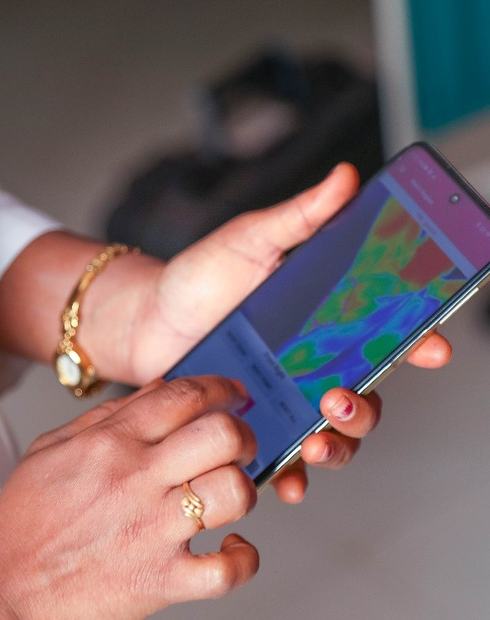
Digital technology is a key enabler of the model. New Vitality app helps connect community-based screening and follow-up with care at health facilities, while addressing gaps created by fragmented paper-based and digital health records.
The interoperable platform includes two connected mobile applications: one for health workers and one for community members. Through New Vitality app, health workers can screen residents for CMD risks, identify and refer high-risk individuals to appropriate health facilities, record and track health indicators, and support follow-up over time. The platform also links data with health facility information systems and the national NCD reporting platform, helping create greater continuity across the CMD care pathway.
For community health workers, this means being better equipped to identify people who need care and connect them with appropriate services.
“After the New Vitality app was introduced, we could identify who needed treatment first and who needed to be referred to health facilities easily.”— Duong Thi Hien, community health worker, Hop Thanh Commune
For health workers at PHC facilities, the platform also provides a more efficient way to manage information and support patient care—replacing some of the burden of managing large volumes of paper records.
“Back then, we usually managed patient records on paper, with a very large volume of documentation. Now with New Vitality app, my work is much more convenient and more effective than in previous years”— Hoang Tuan Du, physician assistant, Hop Thanh Commune Health Station


New Vitality includes connected applications for community members and health care workers. Photo: PATH.
Reaching communities across Thai Nguyen
Since 2024, the model has expanded CMD prevention and care across communities in Thai Nguyen.

Key results from the integrated cardiometabolic disease prevention and care model in Thai Nguyen Province since 2024. Graphic: PATH.
Together, these results reflect a stronger foundation for CMD care at the primary health care level—from a better-equipped and trained health workforce to broader community outreach and screening. At local health facilities, health workers are now better supported to identify people at risk, connect them with appropriate care, and help residents monitor and manage their health over time.
“Screening has been highly effective thanks to project support in terms of supplies, equipment, communication materials, and the app, which helps residents track and manage their health.”— Tran Thi Quynh Trang, registered nurse, Pho Yen Ward Health Station

From a project model to a stronger health system
The next step is ensuring that these gains can continue beyond the project. Local health authorities are already taking steps toward institutionalizing the approach. At a dissemination workshop in September 2026, Thai Nguyen health leaders were directed to integrate the CMD model into the health sector’s 2026–2030 work plan, sustain the New Vitality app to support uninterrupted monitoring and care, and advocate for state resources to expand the model across the province.
Immediately following the workshop, the Thai Nguyen CDC established a task force, led by the CDC Director, to maintain and operate the New Vitality platform. These steps signal a shift from a time-bound project toward a locally owned model that can become part of routine PHC delivery.
“The project's outcomes have been very positive for both the community and the health system. In the coming period, our CDC will strive to coordinate with relevant units to sustain the achievements supported by the project and PATH”— Dr. Anh Le, Deputy Director, Thai Nguyen Provincial Centre for Disease

Health staff at Phu Luong General Hospital review cardiometabolic disease data on the New Vitality platform. Photo: PATH/Manh Nguyen.
By strengthening frontline services, connecting community health workers with facilities, and making health information more accessible across the continuum of care, the Thai Nguyen model demonstrates how digital innovation can support—not replace—the foundations of strong primary health care.
As local health authorities take greater ownership of the model and work to sustain and expand it, the experience in Thai Nguyen offers a promising pathway toward more accessible, connected, and continuous CMD care—bringing essential services closer to the communities that need them.
Reference:
World Health Organization. National survey on the risk factors of noncommunicable diseases in Viet Nam, 2021. 2025