Editor's note: A version of this article was originally published here by The University of Cambridge's Judge Business School.
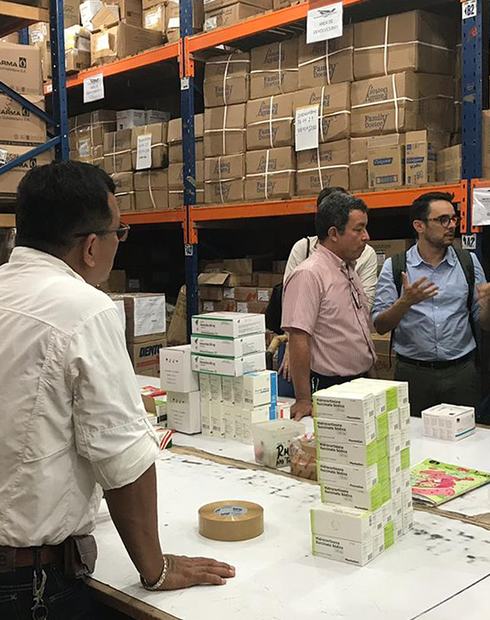
From famine-preventing foodstuffs to life-saving medicines, attention during a crisis usually centers on the production, pricing, and procurement of essential commodities. Affordability at the point of purchase, however, does not guarantee access at the point of care: for the patient waiting at a clinic, a medicine, vaccine, or therapeutic food that arrives too late is not available at all.
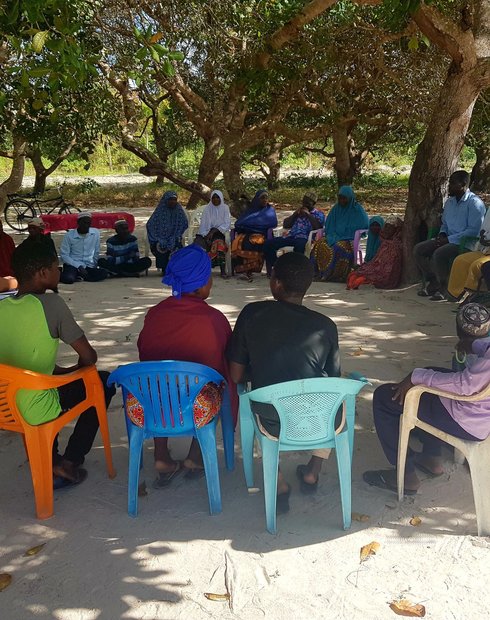
"Skin and bones" is how Somali mother Muumino Adan Aamin described her 11-month-old daughter, Ruweido, who for months had relied on daily sachets of ready-to-use therapeutic food (RUTF) — the peanut paste used to treat severe acute malnutrition. The treatment existed in the supply chain. Yet each time Aamin brought her daughter to a clinic in Baidoa, Somalia, she was turned away because the clinic had none available.
The International Rescue Committee reported that an RUTF shipment large enough to feed more than 1,000 children was held up at an Indian port congested by cargo diverted from Gulf routes because of the war involving Iran. Supply-chain disruption becomes a public health emergency when existing goods cannot reach the people who urgently need them.
A shock facility to keep essential goods moving
The world needs a Humanitarian Logistics Shock Facility: a pre-funded mechanism that keeps life-saving goods moving when normal routes break down.
Over the past two decades, global health institutions have helped make vaccines, medicines, and diagnostics more affordable for millions of people. Much of this architecture, however, was designed to develop, finance, and procure products, with far less protection for their journey through a crisis. A new facility could fill that gap.
The facility would draw on pre-committed funds for emergency freight, fuel, cold-chain protection, and last-mile delivery to clinics, camps, and remote communities. Funds should release automatically when predefined shocks disrupt normal delivery—for example, a closed route, a sudden fuel-price surge, a blocked port, or a climate event that makes ordinary access impossible. It could sit within or alongside an existing global health or humanitarian financing mechanism, with clear triggers and transparent rules.
“Affordability at the point of purchase does not guarantee access at the point of care.”— Ankur Mutreja, Director of External Affairs and Health Security, PATH

Gavi's pneumococcal Advance Market Commitment showed what pooled financing can achieve when the world shapes a market around a public health need. No comparable shock absorber covers logistics costs when routes collapse.
When conflict forces ships onto longer journeys, freight and insurance costs can rise overnight, and humanitarian agencies and health ministries must absorb the difference, deciding what will not be delivered.
Low purchase prices are not enough if products still cannot move when the usual route, fuel supply, or supplier fails. Regional manufacturing matters too, but manufacturing resilience without logistics resilience will still leave patients exposed.
Crises across Asia and Africa expose the same gap
Somalia is far from the only place where a new logistics facility could save lives.
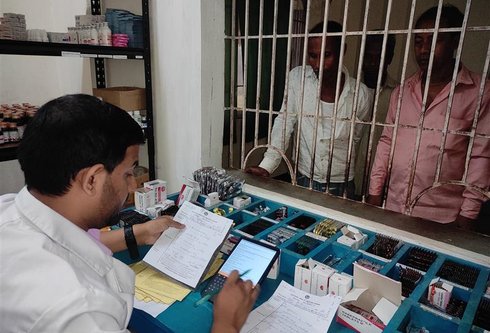
Floods, inflation, and import restrictions have left hospitals in Pakistan short of medicines. In Myanmar, conflict and transport disruption have interrupted tuberculosis and HIV treatment. In island communities in Indonesia and the Philippines, rising fuel costs can make the last mile the first service to be cut.
India's COVID-19 oxygen crisis showed the same lesson at a national scale: supplies existed, but hospitals could not reliably get them under pressure.

Photo: PATH/Will Boase.
Geopolitical instability is usually discussed in the language of markets and shipping: oil prices rise even as journeys grow longer, and risk raises the cost of moving goods. But the shock does not stop at ports or balance sheets.
It reaches a clinic when a tuberculosis patient misses treatment because the drugs have not arrived. It reaches a camp when oxygen is rationed. It reaches a vaccination team when supplies fail to appear. And it reaches a maternity ward when a delayed cesarean section turns a preventable complication into a death.
A narrow idea of efficiency leaves people exposed
Many health supply chains are organized around a narrow idea of efficiency, where success means keeping stocks low and costs down. In normal times, spare capacity can look wasteful. In a crisis, it is the margin that determines whether medicines arrive or shelves go bare. For low-income and crisis-affected countries, that margin is often thinner still.
A cholera kit can arrive after an outbreak has peaked. Vaccines can sit trapped in a container while children remain unprotected. Cold-chain-dependent supplies can spoil when the generator that keeps them viable runs out of diesel.
“Systems built to minimize cost in normal times are, by design, the least prepared for the moments that matter most.”— Paul Kattuman, Prof. of Economics, University of Cambridge

Broken health supply chains cause illness and preventable death. A delayed delivery is only the immediate symptom; these disruptions are no longer exceptional. The real question is who absorbs the cost—a well-financed global shock facility, or a malnourished child waiting for therapeutic food that arrives too late.
A practical reform that cannot wait
Over the past two decades, institutions including WHO, Gavi, CEPI, UNICEF, PATH, the Global Fund, and PEPFAR have helped transform global health outcomes. They have made vaccines, medicines, diagnostics, and other essential commodities more affordable and available for millions of people. But much of this architecture was built around one central problem: how to develop, finance, and procure the product.

Photo: PATH/Georgina Goodwin.
Affordability at the point of purchase is vital, but it does not ensure access at the point of care. Global health has become better at buying life-saving goods than at protecting the routes, fuel, storage, and delivery systems that get those goods to people in a crisis. A Humanitarian Logistics Shock Facility is where that needs to change.
Ankur Mutreja is a Director of External Affairs and Health Security at PATH, a global health-equity non-profit organization.
Paul Kattuman is a Professor of Economics at Judge Business School, University of Cambridge.