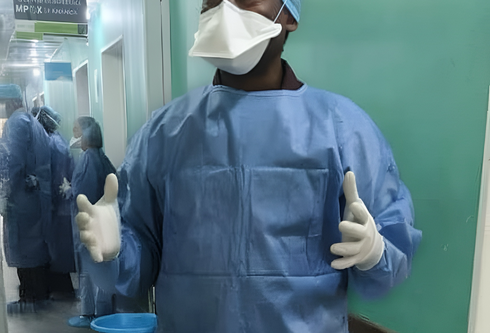
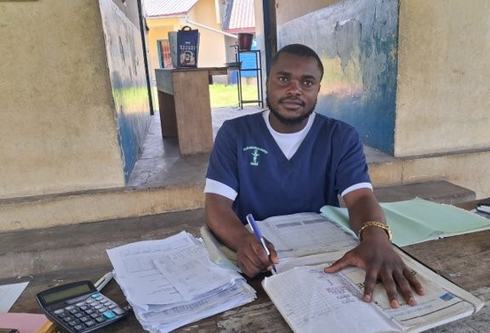
On the day the outbreak was declared, I knew we had been here before. The Democratic Republic of the Congo (DRC) has faced Ebola 17 times. Seventeen times, this country has had to summon everything it has. This time is no different.
The government of the DRC carries an extraordinary burden, leading a response spanning Ituri, North Kivu, and South Kivu, across difficult terrain and among communities that have endured too much of this already. What I see from these leaders every day is determination. Quiet, relentless determination.
PATH has been trusted to work alongside the DRC Ministry of Health for many years in support of the government’s health priorities, and I am privileged to be part of that partnership. The relationship did not begin with this outbreak. It was built through the work that came before it: through previous Ebola responses, through an mpox outbreak, and through the quieter everyday work of strengthening a health system that rarely makes headlines.
What moves me most, standing in this moment, is seeing the systems we built together aiding the response. With support from the Gates Foundation and in partnership with Bluesquare and the Ministry of Health, PATH helped establish the country’s first public health emergency operations center, the centralized body for coordinating outbreaks.
Together, we trained and connected community health workers through digital health platforms that are now tracking cases, flagging alerts, and feeding data into the response. We first truly saw the power of those systems during the previous Ebola outbreaks and the mpox response. These investments were built with resilience and adaptability in mind. Now Ebola is testing them again—and harder.
Despite our progress, the virus has found the cracks. It spread across health zones and crossed borders. It reminded us, as it always does, that a health system is only as strong as its weakest link. This is the time to build on our previous experiences together. It is the moment to repair, strengthen, and respond together. As one.

Ambassadors, multilateral representatives, and partner organizations gathered in Kinshasa on May 29, 2026, for a strategic roundtable convened by WHO Director-General Dr. Tedros Adhanom Ghebreyesus. Photo: PATH.
I have had the privilege of engaging directly with the World Health Organization (WHO) Director-General, senior leaders, international partners, and representatives from across the world. What I witnessed during the Ebola strategic roundtable on May 29 in Kinshasa was alignment. Partners, governments, and institutions finding each other, raising the same concerns, pointing toward the same gaps, and committing to respond in unison.
PATH is honored to be called to serve in that effort. WHO and Africa CDC have jointly launched the Bundibugyo Ebola Virus Disease Continental Preparedness and Response Plan, a six-month, US$518 million commitment organized around the principle of “one plan, one budget, one team.” PATH is named in that plan as a partner under the health information management sub-pillar of the surveillance and epidemiology pillar.
PATH is supporting the ongoing outbreak response and preparing to deploy staff with technical expertise to reinforce capacities in surveillance and data systems.
PATH is also working with the Ministry of Health to digitize health facilities by deploying electronic medical record systems. This work sharpens the tools the country needs to detect, understand, and respond to future health emergencies earlier. By strengthening the quality and timeliness of facility-level data, these investments help ensure that signals from the front lines of care can be seen faster and acted on more decisively.
PATH has also committed catalytic resources for immediate emergency response and research and development. Across PATH, colleagues are advancing the diagnostic and detection capabilities this response still urgently needs. We are proud to be part of the broader planning and alignment underway across governments, WHO, Africa CDC, and partners, all of it oriented toward one goal: getting the upper hand on Ebola.