The Democratic Republic of the Congo (DRC) has faced Ebola outbreaks 17 times.
Fifteen of them were caused by the Zaire strain. For every Zaire strain epidemic, responders turned to proven tools: a licensed vaccine, approved monoclonal antibody therapies, and a containment playbook refined through decades of experience.
This time, many of these proven tools cannot be used.
As of May 21, the World Health Organization had reported 746 suspected cases, including 176 deaths among suspected cases, in the DRC. There have been 83 confirmed cases and nine confirmed deaths in the DRC, with experts warning that the true number of infections could be considerably higher. The outbreak is unfolding in Ituri, North Kivu, and South Kivu Provinces, areas affected by insecurity, population displacement, and frequent cross-border travel, all of which increase the risk of further transmission.
WHO is also reporting two confirmed cases, including one death, in Kampala, Uganda. Both cases were imported from the DRC.
This is only the third time the world has encountered Bundibugyo virus, or BDBV, the virus at the center of this outbreak. It was first identified in Uganda’s Bundibugyo District in 2007, in an outbreak that recorded 149 cases and 37 deaths. The other known outbreak, in 2012, struck Isiro in northeastern DRC, with 57 cases and 29 deaths. The data on how it behaves are scant, the experience base is narrow, and the toolbox is nearly empty.
Unlike Ebola virus disease caused by the Zaire strain, there is no licensed vaccine or specific therapy against the Bundibugyo virus. Early supportive care remains the primary clinical intervention available.
Moving quickly to contain the spread
On May 16, the WHO Director-General determined that the Ebola disease caused by the Bundibugyo virus in DRC and Uganda constitutes a public health emergency of international concern. Two days later, the Africa Centres for Disease Control and Prevention (Africa CDC) declared the outbreak a public health emergency of continental security, its highest-level emergency classification, formally empowering the organization to lead and coordinate the response across the continent.
PATH has been part of the coordinated response from the outset.
The Africa CDC invited PATH to serve as a key partner on its regional coordination team and to join the incident management support team that is being set up, a standing that reflects the relationships and track record we have built over many years.
The approved DRC National Response Plan was presented to the local, regional, and international community on May 21, 2026, with a total budget of $240,265,930. Both funding and implementing partners are currently aligning with the plan, according to the funds that can be rapidly mobilized.
Our DRC team is working closely with the DRC Ministry of Health and the National Institute of Public Health on coordination and planning. PATH DRC Country Representative Nelly Moleka is actively engaged and stands ready to deploy PATH expertise as soon as possible.
In Uganda, PATH teams are participating in daily Ebola surveillance subcommittee meetings and coordinating closely with the DRC office to ensure that information is shared across teams. We also attended the Africa CDC high-level cross-border coordination meetings in Uganda.
Areas of focused contribution
As we align with the DRC National Response Plan, PATH’s contribution is organized around the following three areas:
- Getting data moving faster. An estimated three weeks passed between the likely index event and laboratory confirmation in this outbreak. That gap is both a warning and an instruction. PATH is supporting the digitalization of community health workers as frontline surveillance actors, connecting them to DHIS2 and integrated platforms that the DRC Ministry of Health and Africa CDC are using to manage the response. The goal is to alert investigators with real-time dashboard visibility, guiding resource allocation so that cases and deaths are registered quickly in the national system.
- Supporting local coordination. The National Response Plan coordinates from the center, but outbreaks are contained at the community and facility levels. In the DRC towns of Mongbwalu and Rwampara and the city of Bunia, local coordination capacity must function even when connectivity is fragile and security is volatile.
- Expanding community trust. Containing the Bundibugyo virus without a vaccine means stopping transmission through contact with infectious materials. Community trust is the primary containment strategy. PATH and the DRC Ministry of Health have worked in Ituri in the past, building relationships with community health workers, local health authorities, and the communities they serve. The community health workers in Ituri know how to reach households outside the formal health system. They know how to have conversations across the common barriers of fear and suspicion. In mining communities and displacement camps, where populations are mobile, multilingual, and often skeptical of outside authorities, generic messaging does not work. What works is a known face delivering a clear message in a familiar language and responding to the specific local beliefs that shape behavior.
Harnessing decades of experience
PATH supported the creation of DRC’s Public Health Emergency Operations Center, the country’s first centralized body for coordinating all epidemic responses, built with support from the Gates Foundation and in partnership with Bluesquare.
That infrastructure has served as the backbone of surveillance and coordination across multiple previous outbreaks and is a core mechanism in the current response. The integrated disease surveillance dashboard PATH developed for Africa CDC’s mpox response, which improved case detection and accelerated outbreak response for diseases, including Ebola, is directly applicable to what is needed now.
In Uganda, PATH’s work under the USAID-funded Infectious Disease Detection and Surveillance project left a specific and lasting footprint. Veterinary laboratories in Mbale and at Queen Elizabeth National Park were brought to international accreditation standards. The two facilities are strategically located in areas historically associated with Ebola spillover events (when infected animals transmit a virus to humans).
PATH also worked with Uganda’s National Task Force to train health care workers in epidemic disease management and real-time data processing and to build laboratory staff capacity across six regions to safely handle samples from high-consequence pathogens.
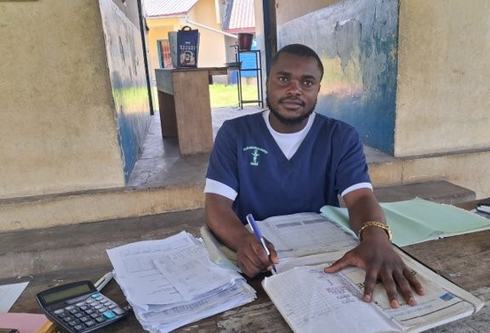
PATH is committed to continuing to support a robust response. Frontline health workers are knocking on doors, tracking cases, and showing up at isolation wards. Containing this outbreak depends on their knowledge and the trust they have built long before any emergency was declared. That is the one part of the playbook that never changes.