Josée Kasawu has been a community health worker in Kwango Province in the Democratic Republic of the Congo (DRC) for more than 10 years. She holds a day job at the provincial tourism office, but on Wednesdays and Fridays, she visits households—knocking on doors, checking on vaccine-eligible children, and relaying what she learns to the nearest health center. As with so many community health workers, she works without a stipend or rain gear, and until recently, without written tools to support her.
She keeps going anyway.
"Malaria harms our children every day and still kills them in our communities," she said. "Knowing that, I cannot stay at home and do nothing."
Several hundred kilometers to the west, in the health area of Kikumbi in Kwilu Province, Luzamba May Bonard follows a similar rhythm. A secondary school teacher by profession and president of his community's health development committee, he performs the role of community health worker without formal training on malaria vaccination and with few communication materials. He works with a megaphone and his own words.
"We would be honored to have better tools," he said. "But we will keep doing this with what we have."
Before every vaccination session, he walks door to door, counting children under five years. He uses a megaphone to mobilize families in the surrounding health areas to bring children for their shots. During vaccination sessions, he keeps talking, explaining how vaccination works and answering questions. Afterward, he compiles a list of missing children and goes back out to find them.
A vaccine that requires more than a single visit
The malaria vaccine, introduced in the DRC in October 2024, is unlike other vaccines in the childhood immunization schedule. Eligible children receive four doses, with the final dose provided well into the second year of a child's life. Keeping families engaged to complete the schedule—despite competing priorities, seasonal mobility, rumors, and vaccine hesitancy—is one of the most challenging aspects of the rollout.
A knowledge, attitudes, and practices survey conducted by PATH and the Ministry of Health (MOH) in 2024 found that only half of caregivers interviewed correctly understood the four-dose schedule, and nearly a third feared social disapproval if they brought their children for vaccination.
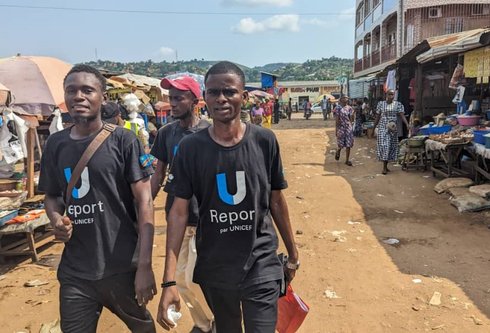
Community workers like Josée and Luzamba bridge the gap between the health system and the family. They show up in places where they can build trust—on doorsteps, at markets, and at school gates.

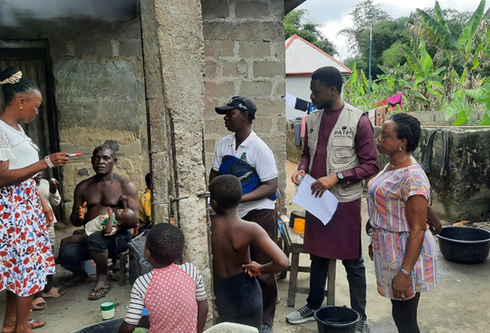
Josée Kasawu has been a community health worker in Kwango Province, DRC, for over a decade—knocking on doors, visiting households, and ensuring children are up to date on their routine vaccinations. Photo: PATH.
The importance of personal connections
In addition to a lack of communication tools and adequate training, community health workers often navigate entrenched resistance. In Kwango, Josée works with communities where several religious groups reject vaccines as incompatible with their faith.
"The majority of refusals we see are linked to religious convictions," she said.
In Kwilu, Luzamba faces similar hesitation, compounded by rumors that circulate through online discussion forums and word of mouth.
Both Josée and Luzamba have learned that one of the most effective responses to resistance is not arguing but simply showing up. Josée recalls accompanying a child with convulsions to the health center when the child's mother believed she could not afford treatment.
“Thanks to my intervention, the child was admitted and treated,” she said. "The gratitude that mother showed me—that is my motivation."
Luzamba’s approach is also driven by personal connection. Before each vaccination session, he does more than count children; he listens to families, notes their concerns, and follows up.
"After the sessions, we draw up a list of children to monitor in order to limit dropouts," he said.
A system built on volunteerism—and its limits
In many ways, Josée and Luzamba illustrate how the community health system works. The DRC's more than 520,000 community health workers, known as RECOs (Relais Communautaires), are organized within Cellules d'Animation Communautaire—coordinating structures at the village and health area levels. This network forms a coherent infrastructure: the community health workers are supposed to be trained and supervised by health center staff and linked to referral systems. They are also expected to report data upward through the national health information system.
As president of his health area development committee, Luzamba sits at a formal coordination node within this structure. His role in tracking children and compiling follow-up lists is a recognized function within the national community health strategy for immunization.
However, the system is largely underfunded. According to the DRC's 2021 Community Health Roadmap from the Community Health Delivery Partnership, implementing the national community health strategy costs an estimated $47.5 million annually. Yet only 19 percent of that amount was covered by donor commitments in the single year, leaving a funding gap of over $38 million.
This lack of funding has meant a heavy reliance on volunteers. At the same time, high turnover among volunteers is a recognized national challenge. Even though stabilizing the community health workforce is a government priority, the necessary resources have not yet been mobilized. Given the constraints, there is heavy dependence on special initiatives that MOH partners undertake in specific health zones.
“I work with young people every day—I see the impact of illness on a child's future. Vaccination is part of that future.”— Luzamba May Bonard, community health worker
What support looks like—and what is still missing
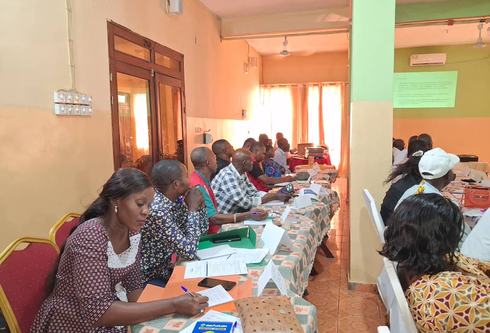
PATH provides technical assistance to the MOH for malaria vaccine implementation in 23 of the country's 26 provinces. This support includes deployment of field officers in three provinces to assist with coordination, data quality improvements, supply chain readiness, and community engagement. At the community level, PATH supports daily coaching and provision of contextualized communication materials for health workers, community health worker networks, and other local partners. Where the assistance has taken root, results are beginning to show.
In Kwilu Province, a health center managed by the Baptist Community of Congo (CBCO) in Bandundu is a top-performing center for malaria vaccine coverage. With the PATH field officer’s guidance, the center's team uses simple practices such as reminding caregivers of their next appointment at the end of every session, sending follow-up messages the evening before, and collaborating with community health workers and other community members to track and visit children who miss their doses. Analysis of the vaccination registry enables the team to monitor appointment adherence in near real time and to respond swiftly when children fall behind.
In Kwango Province, Patient Muyaya, a nurse who coordinates vaccinations at another CBCO Health Center in Kenge, describes a similar dynamic. With support from PATH, his team has strengthened cold chain management, improved data reporting, and organized systematic catch-up sessions for children who missed doses. These efforts are helping to pay dividends: data for the health center from the National Health Information System show a measurable reduction in malaria and anemia cases among children in recent months.
The need for a collective effort
Lessons in areas like Kenge and Bandundu show the value of a coordinated, multi-stakeholder effort in addressing vaccine uptake issues, particularly when children need multiple doses. Inclusion of familiar actors like community health workers in training opportunities and the provision of simple tools can help address practical and logistical challenges and social, informational, and trust gaps.
The DRC's malaria vaccine rollout is one of the most ambitious public health undertakings in the country's recent history. It is meant to reach 4.8 million children 6 months to 23 months of age and requires sustained adherence to four doses across some of the most challenging operational environments.
DRC officials recognize that the sustainability of the community health system hinges on bridging the gap between tasks assigned and resources provided for activities. However, they also recognize the vital work already being carried out by individuals who show up with a megaphone, a notebook they purchased themselves, and a belief that their efforts matter.
When it comes to consistently following up with households in flood-prone health zones, sitting with a father who has reservations based on religious beliefs, or following up more than once with a mother whose child missed the third dose, familiar faces like Josée and Luzamba are indispensable—and simple tools with vaccine orientation could make their efforts even more effective.
For Luzamba, motivation is inseparable from his role as a teacher. "I work with young people every day," he said. "I see the impact of illness on a child's future. Vaccination is part of that future."
PATH provides technical assistance to the DRC Ministry of Health for the malaria vaccine rollout, with financial support from GiveWell and Gavi, the Vaccine Alliance. Field-level support in Kwilu and Kwango provinces is delivered through PATH's antenna-based model, working alongside provincial, antenna and district's health teams, community health workers, non-traditional partners, youth clubs, and other local partner organizations.