Nigeria bears one of the world’s highest malaria burdens, making its efforts to treat and prevent malaria critical in the global fight against the deadly disease.
The country is meeting this challenge with evidence-supported interventions and a comprehensive national strategy geared toward reducing malaria incidence and mortality, strengthening primary health care and reporting systems, and supporting the introduction and maintenance of high-quality drugs and diagnostics.
PATH’s malaria portfolio in Nigeria
PATH’s malaria-related work in Nigeria connects product introduction, delivery at scale, federal strategy and financing, disease surveillance, primary health care integration, and regional manufacturing in support of Nigeria’s national malaria goals.
PATH’s extensive scope is complemented by strong partnerships with Nigeria’s state and national government agencies, including key partners like the National Malaria Elimination Program (NMEP), National Primary Health Care and Development Agency (NPHCDA), Ministry of Health, and the Nigerian Presidential Initiative for Unlocking the Healthcare Value Chain (PVAC).
PATH strives to uplift national and state priorities, aligning its work with the country's needs and supporting the government and ministry in executing their plans.
Federal strategy, analytics, and financing support
The Gates Foundation-funded Malaria Control and Elimination Partnership in Africa (MACEPA) works with the NMEP to provide critical support to translate national priorities into actionable plans with measurable impact.
Most recently, MACEPA supported the workshops for the Global Fund to Fight AIDS, Tuberculosis and Malaria Global Grant Cycle 8 application and National Malaria Strategic Plan.
At these workshops, MACEPA presented data collected via DHIS2—the country’s health information database and system—to help the ministry and NMEP identify the country’s greatest malaria-related health needs and refine the most cost-efficient course of action to address them.
Delivery of malaria tools at scale
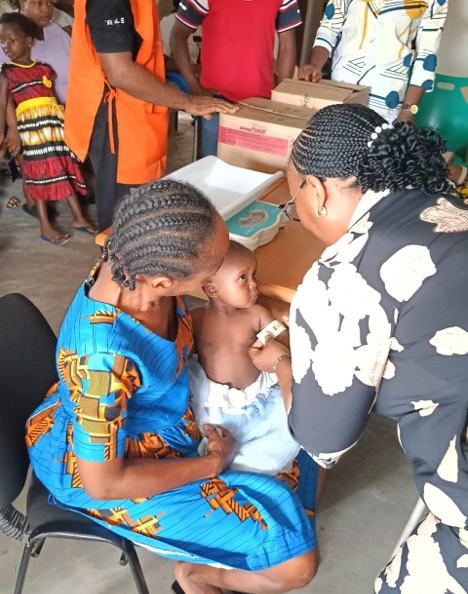
Under the Reaching Every At-Risk Community and Household with Malaria Services (REACH Malaria) project, with US government support, PATH provides preventative measures for malaria to children under five years of age and pregnant women, delivering treatment for uncomplicated malaria and ensuring high-quality diagnostic services in laboratories across Nigeria.
With a focus on community health and service delivery for hard-to-reach populations, REACH works within communities and with community health workers to improve the quality and uptake of proven interventions like seasonal malaria chemoprevention—a preventative treatment for children at risk of severe malaria—and the prevention and treatment of malaria in pregnancy.
PATH, with funding from GiveWell, also supported the introduction of the malaria vaccine in Bayelsa State, focusing on integrating it into routine processes and targeted campaigns.
Introducing the vaccine also provided an opportunity to explore other ways to strengthen and integrate child health care delivery platforms. PATH works closely with the state to identify ways to deliver multiple health interventions—seasonal malaria chemoprevention, perennial malaria chemoprevention, and routine immunization—within one platform.
PATH’s work demonstrates that targeted investments in coordination, community engagement, supportive supervision, and data validation and use can improve both uptake and dose completion.

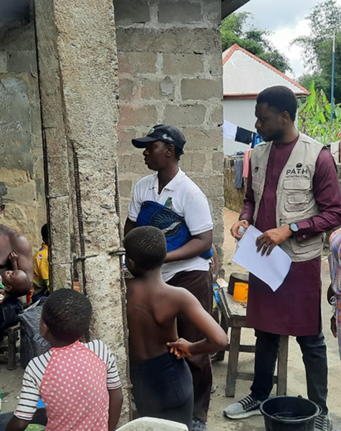
A community health worker conducts household numbering in her community as part of the Rotary Healthy Communities Challenge project. Photo: PATH.
Integrated community-based interventions and primary health care strengthening
Integrated community case management (iCCM) is a widely supported community-based intervention that trains and deploys community health workers to tackle childhood morbidity and mortality.
Since 2024, PATH has worked closely with the NPHCDA on the Rotary Healthy Communities Challenge (RHCC) and REACH Malaria projects to deploy and strengthen iCCM in Akwa Ibom, Kebbi, Ebonyi, and Benue states and align community health worker training with the government’s community health worker strategy.
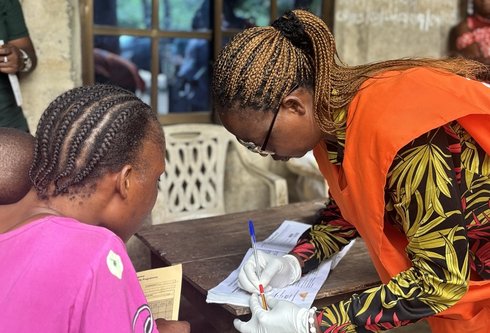
Community health workers are trained to educate community members on health matters and to diagnose, treat, and refer cases of malaria, diarrhea, and pneumonia—uplifting community health and strengthening the primary health care system on a local level.
Regional manufacturing for malaria diagnostics
Through the Unitaid-supported Manufacturing to Accelerate Diagnostic Excellence in Africa (MADE) Project and in partnership with PVAC, PATH supports more resilient access to essential malaria commodities.
Currently, the country is heavily reliant on imported diagnostic technologies, leaving the provision of key malaria diagnostics vulnerable to global supply chain disruptions.
Nigeria can improve sustainable access to diagnostics through regional manufacturing.
MADE is partnering with Codex, a diagnostics manufacturing company near Lagos, Nigeria, to provide funding and technical support to build capacity to produce quality-assured and affordable malaria diagnostics. The project is also working with PVAC to identify ways to coordinate health care-focused industrial policy to support regional manufacturing of malaria commodities, working to limit political barriers that can impact sustainability.

PATH Malaria Nigeria staff gather for a selfie. Photo: PATH/Chinedu Egwuonwu.
PATH Nigeria staff are committed to excelling progress, supporting local leadership, and encouraging a collaborative and adaptive environment to respond to the country's needs. Passionate about their work, they work diligently across PATH projects and with other partners to achieve the greatest impact.
“PATH Nigeria has deepened my appreciation for what thoughtful collaboration and mutual support can achieve. By aligning expertise and uniting around a shared purpose, we foster growth and turn bold ideas into practical solutions.”— Nigeria Country Lead, Dr. Ayebatari Lawson

PATH Malaria Strategy 2026–2030
Nigeria is an example of PATH’s malaria value proposition in action: deep technical expertise, trusted government partnership, strong delivery platforms, product and market-shaping capabilities, and the ability to connect global innovation with country-led implementation.
PATH’s work in Nigeria also exemplifies the application of the PATH Malaria Strategy 2026–2030, demonstrating PATH’s comprehensive approach to supporting countries in their malaria control and elimination goals.