Nigeria carries the highest burden of malaria, accounting for approximately 24 percent of the global disease burden and 30 percent of malaria deaths worldwide. In December 2024, Nigeria introduced malaria vaccines in Bayelsa and Kebbi states. Following these initial introductions, two additional states—Bauchi and Ondo—began providing the vaccine in early 2026 as an additional tool alongside other malaria interventions, such as insecticide-treated nets, intermittent preventive treatment in pregnancy, seasonal malaria chemoprevention, and effective case management—including prompt testing and treatment with quality-assured medicines.
More than a year after Nigeria began its malaria vaccine rollout, uptake of the first dose is strong. However, children must receive all four doses for optimal protection, and dropout rates for the second, third, and fourth doses, though gradually declining, continue to present a challenge.
Crossing difficult terrain
Situated in southern Nigeria, Bayelsa State is one of the most underserved in the country for malaria interventions. Characterized by a landscape of creeks, rivers, and lagoons, many communities are scattered across swampy terrain and can only be reached by boat, especially during the rainy season.
Bayelsa’s riverine geography also creates significant barriers to routine immunization. Limited road networks, long travel times to health facilities, and high rainfall and flooding can impede access to services.
Caregivers struggle to return multiple times to health facilities so children can complete the four-dose malaria vaccine schedule. Further, while many caregivers learned about malaria vaccines during an initial introduction campaign, few mechanisms were in place to remind them to bring children back for subsequent doses.
Building new momentum
To help sustain uptake of the vaccine, PATH is working with house-to-house mobilizers, who already have deep knowledge of households, families, and eligible children in the areas where they work. House-to-house mobilizers routinely visit households in both upland and riverine areas, accessing communities that have limited access to health facilities. The mobilizers understand local settlement patterns, waterways, and social networks, enabling them to conduct household follow-up visits and identify children who have missed vaccine doses.
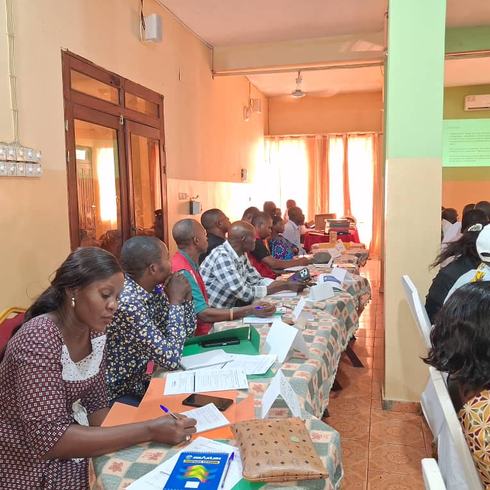
PATH’s technical assistance has included training house-to-house mobilizers in Bayelsa’s Ogbia and Sagbama local government areas (LGAs) on the malaria vaccine schedule and equipping them with tools to provide caregivers with specific reminders about follow-up doses. Familiarizing community leaders and local stakeholders in both areas about the schedule and documenting their concerns and perceptions related to malaria vaccines has also been part of the overall approach.
“We are seeing more turn-up in our facilities by caregivers for subsequent doses of the malaria vaccine following the intensified efforts of the mobilizers in Sagbama.”— Kurofuo James, Local Immunization Officer, Sagbama, Nigeria

Mobilizers work closely with vaccination teams that conduct outreach sessions in hard-to-reach areas. They identify settlements located across creeks and swamps, inform caregivers about upcoming outreach visits, and guide vaccination teams to communities that are inaccessible by road—bringing them to families in every region of Ogbia and Sagbama.
Synergies with other routine vaccines
Between October 2025 and March 2026, 40 PATH-trained mobilizers in Ogbia and Sagbama held more than 700 dialogue sessions in communities and made more than 1,200 visits to caregivers.
“We are seeing more turn-up in our facilities by caregivers for subsequent doses of the malaria vaccine following the intensified efforts of the mobilizers in Sagbama LGA,” said Kurofuo James, the local immunization officer in Sagbama.
Engaging house-to-house mobilizers is an opportunity to strengthen immunization coverage for other routine childhood vaccines as well.
“Our vaccination coverage data has significantly improved,” said Elizabeth Ogisi, Director of Primary Health Care, Ogbia LGA, Bayelsa State. “We have seen increases not only in the uptake of malaria vaccine doses, but in other [routine immunization] antigens.”

Ward Focal Person and other community health workers following up on and inspecting child health cards to identify eligible and missed dose children for vaccination in Bayelsa State, Nigeria. November 2025. Photo: PATH/Ekpo Edet.
The approach also optimizes existing resources and systems—no new workforce, digital tools, or additional cost structures are required, and house-to-house mobilizers and leaders are already trusted resources within communities. Engaging the mobilizers reinforces existing primary health care systems by leveraging trusted community structures to improve continuity of care.
Lower dropout rates, stronger protection
Alongside other community engagement strategies, the work of house-to-house mobilizers is already making an impact in Bayelsa. In Ogbia, the dropout rate for the first to third dose fell from 78 percent in February 2025 to just 27 percent in February 2026; in Sagbama, the dropout rate decreased from 78 percent to 37 percent over the same time period. Both LGAs have recorded a corresponding increase in malaria vaccine uptake over the last year.
The aim is now to document lessons from the two LGAs so they can be applied in the rest of Bayelsa and other parts of the country to ensure that as many children as possible receive their required doses. Use of trusted local actors represents a sustainable and scalable approach to continue reducing dropout rates and improving malaria vaccine uptake.