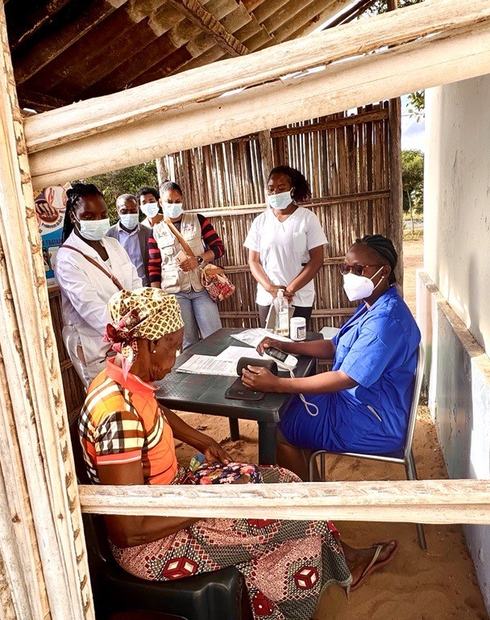
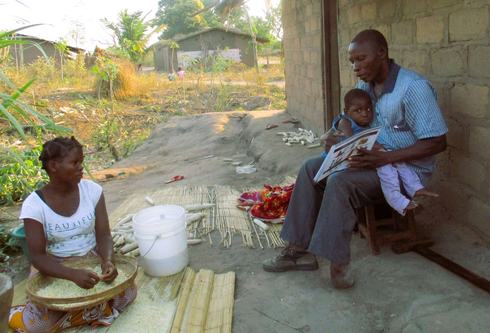
“Imagine Ana, a girl trying to navigate a rapidly evolving health system alongside her family. When she needs care, the distance to the nearest facility, lack of transport, and long waiting times can be barriers.
“Now imagine if Ana’s health information traveled with her. If a community health worker could use a simple digital tool to track her health journey. If referrals were seamless and services were tailored to her needs, even in her own language.”
This is how Dr. Annette Cassy, Digital Health Consultant at the World Bank and former Deputy Director of Planning and Cooperation at Mozambique’s Ministry of Health, introduced a fictional character named Ana.
Ana may be fictional, but her story shaped a very real conversation at “Digital Health: Technological Innovation Driving Better Health Outcomes,” Mozambique’s first digital health conference.
A country of opportunity and complexity
Mozambique is home to approximately 36 million people and has one of the fastest-growing populations in the region. It is a predominantly young country, with a median age under 18 years and an estimated 60 percent of the population living in rural areas.
These demographics present both an opportunity and a challenge: a rapidly growing, youthful population with rising demand for health services, but also with significant barriers related to geography, infrastructure, and access.
For many Mozambicans, especially those living in rural areas, accessing timely, high-quality health care remains difficult, making digital health solutions a critical pathway to expanding reach and improving equity.
For many Mozambicans, especially those living in rural areas, accessing timely, high-quality health care remains difficult, making digital health solutions a critical pathway to expanding reach and improving equity.


Dr. Ivan Manhiça, Permanent Secretary of the Ministry of Health, speaking at the conference. Photo: Ministry of Communications and Digital Transformation.
A national vision comes to life
After a year of planning, the conference, convened by the Ministry of Health (Ministério da Saúde), brought together government leaders, global partners, innovators, and communities to chart the future of digital health in Mozambique.
The convening became a dynamic platform featuring exhibitions of digital health solutions, from established systems to emerging startups; high-level panel discussions with national and international experts; and a hackathon showcasing the role of young technologists in shaping the future.
A central figure in this journey was Dr. Cassy, the former Deputy Director of Planning and Cooperation at Mozambique’s Ministry of Health, who continued to champion digital health through her work with the World Bank. Together with Dr. José Manuel, the National Director of Planning in the Ministry of Health, and Dr. Baltazar Candrinho, the Deputy Director of the National Directorate for Planning and Cooperation, Dr. Cassy helped bring the conference to fruition.
From the very first session, Dr. Cassy anchored the conversation around one key principle: people.
Ana—a fictional persona she introduced—became that symbol.

PATH Mozambique Country Office Representative Melanie Picolo (left) and Dr. Annette Cassy, digital health consultant, World Bank. Photo: Mozambique Ministry of Health.
Across panels, whether discussing artificial intelligence (AI), data protection, interoperability, or financing, one question echoed: How will this work for Ana?
This question framed critical reflections:
- Are digital hospitals benefiting only those who already have access to care?
- Are systems designed with communities, or simply delivered to them?
- Who risks being excluded as technology expands?
During a panel moderated by Melanie Picolo, PATH Mozambique Country Office Representative, experts highlighted that digital health is not inherently equitable and, without intentional design, can reinforce existing inequalities, particularly due to limited connectivity and electricity, low digital literacy, language and cultural barriers, and gender and rural-urban disparities.
One of the most compelling moments of the conference came from the hackathon. The winning solution used AI to support communication for people with hearing and speech impairments, bringing services closer to those often excluded.
It was a powerful reminder that innovation does not only come from global institutions; it lives in local talent.

Melanie Picolo, Country Office Representative, PATH Mozambique (center), moderating a panel with Wycliffe Waweru, Head of Digital Health, PSI (left), and Debarshi Chaudhury, Co-founder and Chief Technical Officer at Galenica AI. Photo: Dr. Ivan Manhiça.
Mozambique’s opportunity: A strong foundation
Mozambique is not starting from scratch, as the country has already developed a national digital health enterprise architecture, advanced policy frameworks to guide implementation, and secured investment commitments from partners.
There is also growing alignment across sectors. The memorandum of understanding signed between the Ministry of Health and the Digital Transformation and Innovation Agency signals recognition that digital health cannot be pursued in isolation.
Innovative ideas are also emerging, such as adopting a unified citizen identification system, like Brazil’s Cadastro de Pessoas Físicas, to streamline access to services across sectors.
The role of partners and financing
Global partners are playing a catalytic role. At a high-level donor panel, the US government emphasized integrated systems aligned with national priorities, the Global Fund highlighted sustainability through country ownership and system integration, and the World Bank underscored digital transformation as a cost-effective pathway to universal health coverage.
However, critical challenges remain, including ensuring that infrastructure, such as electricity and connectivity, reaches communities; expanding digital solutions beyond central systems to the primary health care level; and supporting domestic financing to sustain systems over time.

PATH president and CEO Nikolaj Gilbert (left) presenting a certificate to Dr. Ivan Manhiça at the Mozambique Ministry of Health in January 2026. Photo: PATH.
Learning from global experience
Mozambique’s journey mirrors challenges seen globally. PATH has supported digital health efforts in multiple countries and regions, offering relevant lessons:
- In India, PATH contributed to digital platforms that improve supply chain visibility and vaccine delivery.
- In Kenya, interoperable health information systems enable data sharing across facilities and programs.
- In Vietnam, digital tools strengthened disease surveillance and response.
- In the Democratic Republic of the Congo, Tanzania, and Zambia, PATH supported electronic medical record systems that improve continuity of care.
- In Ghana, Tanzania, and Malawi, PATH strengthened interoperable digital immunization systems, enhancing vaccine delivery and strengthening pandemic preparedness.
PATH supported the Africa Centres for Disease Control and Prevention through technical assistance on digital health and data capacity strengthening, including fellowship curriculum development, health information exchange and standards work, and guidance on health informatics job classifications and position descriptions to help strengthen the continental digital health workforce and institutional capacity.
Across these contexts, a consistent lesson emerges: Technology alone does not transform health systems; people, policies, and partnerships do.

Health care workers in Tanzania are using digital tools to improve care. Photo: PATH/Trevor Snapp.
The road ahead
Key reflections stand out: People must remain at the center; digital health requires multisectoral collaboration; solutions must be intentionally inclusive across age, gender, geography, and literacy levels; coordination is essential to avoid duplication and ensure efficiency; and young innovators must be part of the ecosystem.
For PATH Mozambique, this moment is both a milestone and a call to action.
Ana represents millions of people whose lives can be transformed by stronger, more inclusive health systems.
Digital health offers powerful tools, but only if they are designed with intention.
As Mozambique moves forward, the challenge and the opportunity are clear: Build a digital health system that works for Ana. And for everyone like her.

Nurses at St. Joseph’s Clinic in Zambia review vaccination data in an electronic immunization registry. Photo: PATH/Chimwasu Njapawu.