Everyone has a right to lifesaving health innovations, no matter where they live. PATH’s Product Development division exists to turn that right into reality, working in partnership to research, develop, and ensure access to the diagnostics, health technologies, and vaccines that address the world’s most pressing health needs. Our work has resulted in more than 50 new products being brought to market for low- and middle-income countries.
This is one of the priorities at the heart of PATH’s Strategy 2030. PATH works across the full length of a product’s life cycle, from the initial scientific concept to everyday use in the clinics and communities it is meant for. We conduct the research and clinical development to show that a product is safe and effective. We work with partners to make it affordable, available at a sufficient volume, and suited to the conditions where it will be used. And we stay with it as it scales, so that what works in one place can reach many.
Access and affordability
A product can be approved and still not reach the people it is for because it is priced out of the health systems that would buy it, lacks an effective commercialization strategy, or is unworkable in the conditions where it is needed. PATH works on all of these aspects, so the products we develop are affordable, accessible, and usable where they are needed.
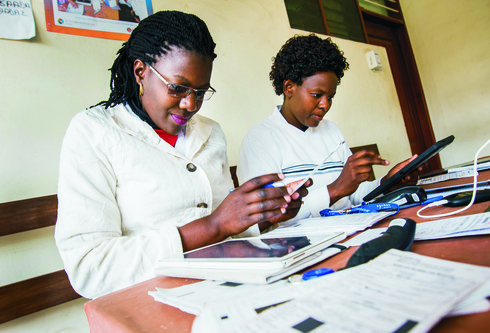
The G6PD test we co-developed with SD Biosensor shows what that means in practice. Radical cure therapies for Plasmodium vivax malaria can cause a severe blood disorder in people with G6PD deficiency, a hereditary condition. Previously, testing for G6PD deficiency required a laboratory test that most patients in affected areas could not reach.
The test we developed brought a G6PD diagnostic to the point of care, so people can be tested for G6PD sufficiency and treated safely and effectively where they are. It is the first of its kind to earn World Health Organization prequalification and is registered in more than 30 countries. It is also included in five national malaria programs, including in Brazil, which has a large burden of P. vivax cases.
Scaling to lasting impact
Once a product is proven safe and effective, PATH works to create the conditions for it to reach everyone who needs it, partnering with national health ministries, manufacturers, donors, and regulators on the introduction, supply, and policy decisions that carry a product from approval into widespread use. This is the country-led work that ensures an innovation has lasting impact.
Many vaccines lose their potency when exposed to heat. PATH adapted existing technology to develop a temperature-sensitive vaccine vial monitor sticker that tracks heat exposure over time. Vaccine vial monitors now sit on every vaccine UNICEF buys. Since 1996, more than 10 billion have helped ensure that only effective vaccines reach children.
For a century, deadly meningitis epidemics have swept across sub-Saharan Africa. The meningitis A vaccine we developed with the World Health Organization and the Serum Institute of India is tailored for use in Africa, in response to a call from the continent’s health ministers. The vaccine has since reached more than 360 million people and all but eliminated the disease across the meningitis belt.
Why this matters now
Funding for global health is under growing pressure, and long-term research and development is often the first thing to come under threat when budgets tighten. Cutting this funding would set back the health of millions for years and leave the people who most need protection without the innovations meant for them.
The case for staying the course is written in what we have already achieved together. The world’s first malaria vaccine, more than two decades in the making, has now reached millions of children across sub-Saharan Africa, and PATH is helping more countries introduce it.
Each of these products began as an idea and took years of development, funding, and partnership to reach the people who use them now. Through 2030, PATH will keep translating scientific advances into the diagnostics, vaccines, and devices designed for the populations that bear the greatest burden of disease and do not always have access to these critical tools.