Earlier this year, I arrived in Addis Ababa, Ethiopia, for the African Union Summit, where conversations about health sovereignty dominated the agenda. Leaders debated domestic financing, local manufacturing, regulatory harmonization, and how Africa can shape its own health future.
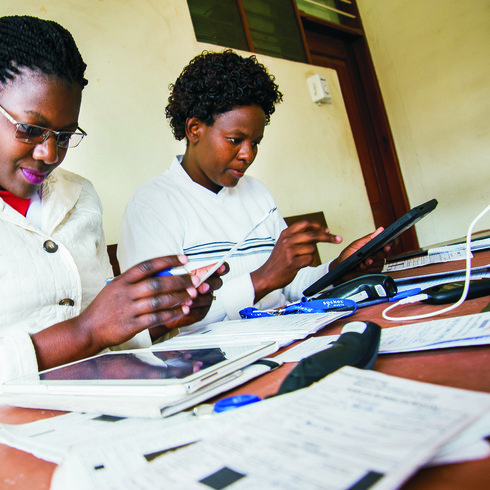
A few days later, I found myself in Gute, East Wollega, speaking with Netsanet, a nurse in a health center where PATH supports the integration of immunization, nutrition, maternal health services, and community outreach. Every day, she helps families access care that protects children from disease and gives them a healthier start in life.
While leaders in Addis debated the future of health systems, in Gute, health care workers like Netsanet carry that future on their shoulders. But whether those two worlds connect is far from certain.
The question at the heart of PATH’s Strategy 2030
So often in global health, the solutions are well known, but progress still stalls. The question that followed me home is simple: If we know what works, what determines whether those decisions ever translate into better health for the families Netsanet serves?
For nearly 50 years, PATH has helped turn scientific breakthroughs into practical solutions that improve health. But in today’s changing global health landscape, impact is rarely limited by needing to discover what works. Instead, it’s the political, financial, and institutional choices that determine whether proven solutions are adopted, financed, and delivered for lasting change.
PATH's Strategy 2030 includes three strategic priorities. Across all three—developing and introducing vaccines, diagnostics, and devices that reach everyone; protecting more people from infectious diseases; and strengthening and integrating health care for current and emerging needs—success depends not only on innovation, but also on the policies, financing, and partnerships that determine whether innovation reaches people at scale.
A malaria vaccine only changes lives if governments can afford to introduce it. New diagnostics only improve care if regulators approve them and health systems can deploy them. Strong primary health care requires not only effective interventions but also sustainable financing and accountable institutions.
To bridge the chasm between lofty political commitments and long-lasting local impact, advocacy is essential. That’s why our new strategy emphasizes financing and partnership as key to sustaining impact. As development assistance declines and countries seek greater ownership of their health futures, lasting progress will depend on stronger domestic institutions, broader coalitions, and more inclusive decision-making.
PATH’s approach to advocacy is evolving
The future is not just about delivering for communities. It’s about ensuring communities help shape the decisions that affect them.
Through the GFF × CIVIC Platform and our partnership with the World Bank and the Global Financing Facility across 22 African countries, PATH and our local partners are strengthening the capacity of civil society organizations and youth leaders to influence health financing and accountability decisions. The goal is to ensure the voices of women, children, adolescents, and communities help shape how resources are mobilized, prioritized, and invested.
The same principle guides our work globally, regionally, and nationally. Whether supporting the African Medicines Agency and strengthening national regulatory agencies to accelerate the introduction of game-changing technologies, helping governments strengthen primary health care, protecting investments in women’s and children’s health, or building coalitions that drive accountability, our role is to connect evidence, policy, financing, and citizens’ voices.
Because ultimately health sovereignty is not measured by declarations, communiqués, or summit outcomes. It is measured by whether a nurse like Netsanet has the tools, resources, authority, and support she needs to serve her community.
The distance between Addis and Gute can be measured in kilometers. The distance between innovation and impact is measured by whether people like Netsanet can turn ambition into action.
Helping bridge that distance may be the most important contribution a global nonprofit can make in the decade ahead.