Eight years ago, Esther Nasikye walked into a labor ward in Kampala, Uganda, with a simple hope: to return home safely with her newborn baby. A day after surgery, she began hemorrhaging.
As a public health advocate, Esther had spent years working alongside governments and partners to improve maternal health policies and expand access to lifesaving commodities. She was accustomed to the jargon in technical meetings and advocacy spaces. But in that moment, faced with a life-threatening complication, none of that language could capture what she was experiencing.
“All I wanted was to survive," she recalls.
When her doctor prescribed misoprostol to stop the bleeding, she remembered the advocacy efforts she had helped lead in Uganda to secure government funding for the medicine. Years earlier, she had championed investments in maternal health commodities so other women could access lifesaving care. Now, she was one of them.
"The very medicine we had advocated for was available when I needed it, and it saved my life."
The experience reinforced something Esther has believed throughout her career: behind every policy decision, budget allocation, and advocacy campaign are real people whose lives depend on whether health systems deliver.
Making room at the table
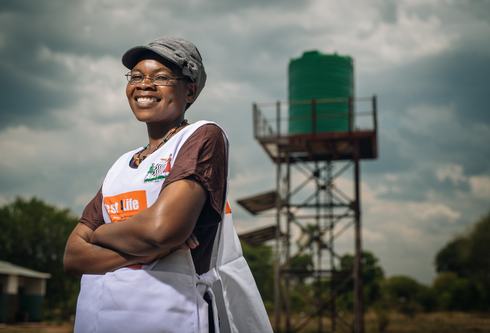
Today, Esther serves as PATH's Global Maternal, Newborn, Child Health (MNCH) and Immunization Policy Lead. Over nearly two decades, she has built a reputation as a trusted and effective advocate, known for bringing diverse voices together around a common goal: ensuring women, children, and adolescents have access to the care they need to survive and thrive.
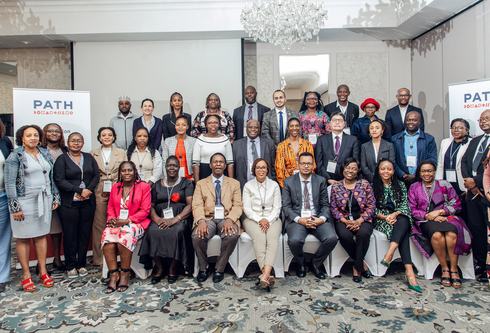
A firm belief that lasting change takes everyone at the table—from government leaders to parent groups—has guided her work for years. She's brought governments, global health agencies, civil society, and community voices from across Africa together to build shared strategies for protecting women's and children's health.
Her work also spans the local to the global.
At the country level, she has helped shape policies and financing strategies in Uganda, Kenya, Malawi, and Zambia, supporting efforts to increase domestic investments in maternal and child health and immunization.
At the global level, she co-chairs a working group uniting advocates across maternal and child health, and has partnered with WHO, UNICEF, and UNFPA to bring more than 40 partners together around a shared strategy for maternal and newborn health advocacy. She's also lent her voice to Gavi's civil society steering committee, making sure policies are shaped by what's actually happening on the ground.
“When civil society and youth are meaningfully engaged, health systems become stronger, more accountable, and more responsive to people's needs.”— Esther Nasikye, PATH's Global MNCH and Immunization Policy Lead

Amplifying new voices
A commitment to inclusive engagement is at the heart of Esther's newest role.
She will lead a new consortium called Voices Organizing for Inclusive Civic Engagement or VOICES, who will implement Pillar 1 of the World Bank's GFF × CIVIC Platform, designed to strengthen meaningful civil society and youth engagement in health financing and health system decision-making. PATH was selected to lead one of two global consortiums supporting the platform and will work alongside the African Institute for Development Policy (AFIDEP) and the Organisation of African Youth (OAY).
The consortium will provide technical assistance and grant funding to civil society and youth-serving organizations across 22 African countries, helping them participate more effectively in policy dialogue, accountability efforts, and domestic resource mobilization for RMNCAH+N programs.
The initiative arrives at a critical moment. As aid funding takes a sharp downturn, countries across Africa face increasing pressure to do more with limited resources while protecting essential health services for women, children, and adolescents. At the same time, local organizations and young people are seeking greater opportunities to influence decisions that affect their communities.
"Communities know where the gaps are and often have the solutions," Esther says. "When civil society and youth are meaningfully engaged, health systems become stronger, more accountable, and more responsive to people's needs."
Under her leadership, the consortium will focus not only on increasing participation but also on ensuring that engagement leads to measurable change in health financing and policy decisions.
Coming full circle
Now, as she leads PATH’s GFF × CIVIC Platform consortium, Esther has an opportunity to help a new generation of advocates do what she once did—turn lived experience into policies that save lives.
Because for her, the mission has always been personal. Behind every budget line, policy reform, or health system investment, she says, is someone like her: a scared mother in a labor ward, hoping only to survive and make it home to her family.