On the outskirts of Medellín, the peri-urban settlement of Granizal offers an essential lesson about digital health. Technology, connectivity, and infrastructure all matter—but ultimately, telehealth works because of people.
Granizal is home to more than 22,000 residents, many of whom are internally displaced people facing persistent barriers to care. With no health center in the territory, local women leaders and community health workers built GraniSalud, a community health post created with contributions from residents and financial support from foundations and nongovernmental organizations. Although they sought to have a doctor available at least one or two days per week, facility authorization requirements and a lack of political support made this impossible.
Building telehealth with communities
Telemedicine emerged as a practical way to bring care closer: Community health workers organize appointments, receive patients at GraniSalud, and facilitate remote consultations with a general practitioner. To prepare for this model, the Universidad de Antioquia trained them on telehealth and telemedicine regulations, the use of telehealth technologies, and remote clinical assessment from the perspectives of both the community health post and the physician.
The training included a visit to the Universidad de Antioquia’s Living Lab Telesalud, where the community health workers saw a referral center and met the people who would be on the other side of the connection to support them. This approach aligns with a peer-reviewed study by the Universidad de Antioquia and the University of Florida, including co-author Juan Fernando Mesa Valencia. The study brought together seven researchers, five community health workers, and three municipal decision-makers to define how to evaluate and strengthen telehealth in Granizal.
In addition to connectivity, sanitation, and privacy, they prioritized continuity of care, digital literacy, patient follow-up, medication access, and support for the community health workers themselves.
“At GraniSalud, health is built through trust, listening, and closeness. Telehealth reaches people long disconnected from care, breaking barriers and bringing dignified, compassionate health care within reach.”— Esmeralda Ulcué, community health worker leader in Granizal

Supporting a Ministry-owned national roadmap
Those lessons closely align with what PATH and the Universidad de Antioquia heard while supporting Colombia’s Ministry of Health and Social Protection (Ministerio de Salud y Protección Social, MSPS) in developing its costed national roadmap to strengthen primary health care through telehealth.
Beginning in 2024, MSPS invited PATH and the Universidad de Antioquia to provide technical support in shaping this national strategy. Built through institutional surveys, field visits across six municipalities, participatory validation, and cost modeling, the Ministry’s roadmap spans nearly 70 recommendations across six interconnected dimensions—from policy and governance to physical and digital infrastructure. Under a medium-maturity scenario, the roadmap estimates roughly US$189.6 million over five years, with more than 75 percent dedicated to digital connectivity.
Crucially, the Ministry’s roadmap recognizes that hardware alone cannot close care gaps. Its recommendations prioritize building community trust, strengthening digital literacy, and equipping community health workers with structured training, workflow integration, and ongoing technical assistance.
“The vision is national, but implementation happens locally. Colombia can build on solutions communities and institutions are already demonstrating, learn from what works, and thoughtfully take them further.”— Juan Fernando Mesa Valencia

Catalyzing investment to advance the Ministry’s vision
A national roadmap creates lasting impact when partners invest in putting it into action. Following recent discussions in Colombia between PATH leaders, MSPS officials, and development partners, the priority ahead is clear: Mobilize targeted investments that align with the Ministry’s strategic priorities and scale proven, community-led approaches on the ground.
Granizal’s experience offers a model that can inform other settings while being adapted to each community’s local context and needs. It demonstrates a practical principle for implementing the Ministry’s roadmap: Start with communities, strengthen the local health workers and institutions already delivering care, measure what works, and adapt before expanding.
To help Colombia realize this vision, PATH is working alongside the Ministry of Health, Colombian universities, and local partners to attract catalytic investment and expand initiatives like Granizal under the national telehealth roadmap. By pairing PATH’s support in human-centered design, interoperability, costing, and implementation planning with Colombia’s public-sector leadership, academic expertise, and knowledge of community health workers, partners can help ensure that geography no longer determines who receives quality primary health care.

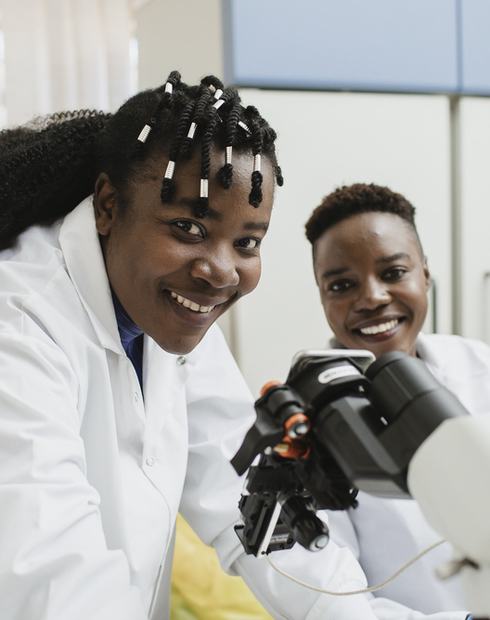
Granizal community health workers visit Universidad de Antioquia’s Living Lab Telesalud to learn how the referral center supports remote care. Photo: Juan Fernando Mesa Valencia/Universidad de Antioquia.