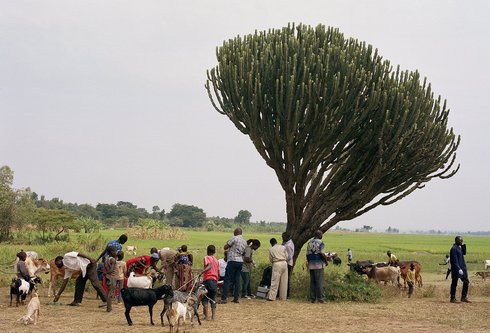
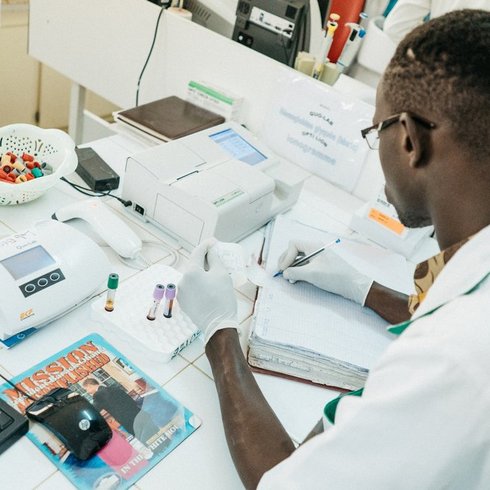
Community members are a vital part of detecting emerging health threats. Patterns of illness, unexpected animal deaths, and other relevant events are usually observed in communities well before they ever reach health facilities. Comprehensive disease surveillance depends on this local engagement, as well as strong systems created to recognize and report key signals.
In Nigeria, community-based surveillance (CBS) tools have historically been fragmented across sectors and have lacked the integration needed to work through a single standardized reporting system. This has led to challenges in data comparability, coordinated outbreak detection, and response efforts.
To help address these gaps, the Nigeria Centre for Disease Control and Prevention (NCDC), with technical support from PATH through STRIDES (Strengthening Infectious Disease Detection Systems), is working to create a more harmonized approach to CBS. STRIDES is funded by the U.S. government and led by FHI 360 with core partners PATH and Black & Veatch.
Bringing sectors together through a One Health approach
Good disease surveillance requires a unified One Health approach to identify, report, and respond to health threats across technical disciplines. In Nigeria, surveillance efforts have been siloed, with limited communication between the human, animal, and ecological health sectors. Issues with event detection were amplified by the lack of a standardized reporting tool.
From July 27 to August 1, 2026, STRIDES convened the first-ever national workshop focused on coordinating enhanced, multisectoral disease surveillance, held in Abuja, Nigeria. A total of 104 participants attended, representing Adamawa, Enugu, and Kano states, the Federal Capital Territory, and national ministries and agencies. Participants came from the human health, animal health, ecological health, agriculture, and food security sectors.
The workshop was held over two sessions, focusing on both community-based and event-based surveillance (EBS). During the first several days, participants built consensus around a shared goal of a multisectoral approach to surveillance and stronger coordination to address existing gaps. These discussions led to the creation of a technical working group for both CBS and EBS.
“This is a monumental success for Nigeria and the NCDC... STRIDES is the brain behind the success of the CBS/EBS activity, and now other partners are trying to emulate it.”— Tajudeen Arowolo, Surveillance and Epidemiology Department, NCDC

The technical working group developed CBS and EBS communications materials to formalize shared commitments and next steps among partners. Together, these efforts created a mechanism for continued coordination and led to the creation of a standardized reporting tool.
One harmonized community-based surveillance tool
The NCDC asked partners to use a pre-existing human health CBS reporting mechanism as the foundation for a tool that could also capture signals from the animal, ecological, and agricultural sectors. PATH led this effort and at the subsequent meeting to review the updated tool, it was agreed that a larger workshop of all concerned sectors should be convened to review the updated tool, ensure that their expected signals were captured, and make further inputs.
The new digital CBS reporting tool helps make surveillance information more consistent and easier to share across sectors. Community informants can use it to report signals directly from the field, with the information stored in a centralized repository for review. By unifying reports into a common system, the tool will support earlier identification and coordinated assessment of health threats.
Training for community informants has already been completed in two states, with additional training planned to expand implementation across Nigeria. The CORE Group Partners Project (CGPP), an organization supported by 1,173 active community volunteers, has committed to expanding training in more states.
“The bringing together of all sectors and partners... and the production of a harmonized tool for CBS reporting is commendable, and CGPP will ensure to organize trainings for five other states following the STRIDES model.”— Oros Adia, Technical Lead, CGPP

From collaboration to long-term coordination
Developing a harmonized reporting tool is one step toward building a stronger surveillance system. Maintaining that progress requires continued coordination among partners, as well as making sure community informants know how to use the tool effectively.
Early implementation has highlighted the need for additional training, particularly on animal and ecological CBS reporting. While community informants working in human health are often already familiar with CBS and standard case definitions, informants working in the animal and ecological sectors need more support to build that same familiarity.
As the tool continues to roll out across Nigeria, PATH is working with local partners to strengthen capacity so that signals from all sectors can contribute effectively to a One Health surveillance system.
A huge thank you to Tushara Surapaneni, Philip Igawe, Gloria Archibong, Julius Mutum, Sunday Elesi, and Joshua Loko for their contributions to this article.