In mid-April 2026, stakeholders across Kenya’s health sector convened for the third edition of the Kenya Primary Health Care (PHC) Learning Webinar Series—a session that moved the conversation from policy ambition to the practical realities of financing primary health care.
Building on a previous discussion about financing PHC for universal health coverage, this edition focused on PHC financing flows. The session’s goal was to examine PHC financing flows in Kenya and what it takes to translate policy intent into effective implementation across national, county, and household levels, thereby enhancing collective learning to move beyond dialogue and ensure financing mechanisms truly support Kenya’s vision of equitable, people-centered PHC.
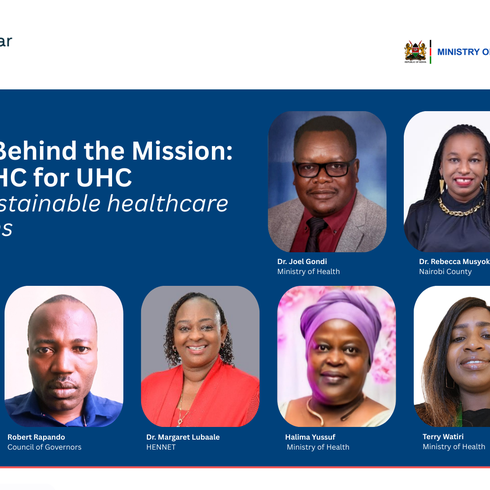
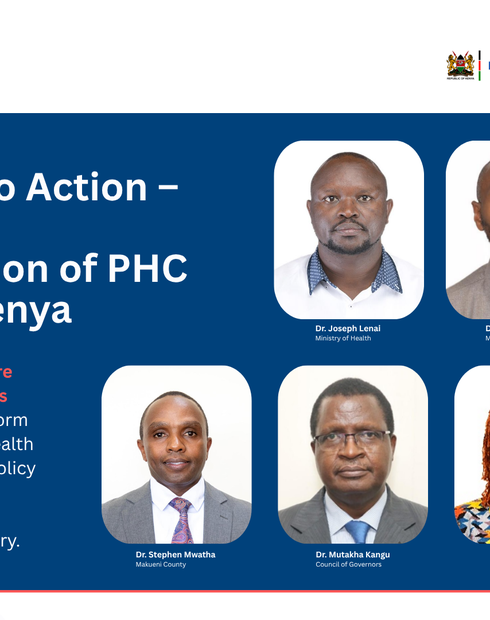
The webinar brought together a diverse panel of experts and practitioners from national, county, and global levels. Key contributions came from Dr. Joel Gondi, Director of PHC at the Ministry of Health (MOH), alongside financing experts Dr. Stephen Kaboro and Dr. Tracey John, who provided insights into national policy and financing reforms. County-level perspectives were shared by Dr. Salma Mohammed from Mombasa County, while Dr. Julie Zollmann of Ekko Insights enriched the discussion with real-world evidence from household health financing experiences. The session was skillfully moderated by Melissa Wanda, Policy and Advocacy Manager at PATH, ensuring a balanced and engaging dialogue across all perspectives.
Are we scaling PHC financing?
Opening the session, Dr. Joel Gondi challenged participants with a fundamental question: Can Kenya confidently say its primary health care system is fully functional and sustainably financed?
He pointed to persistent challenges—fragmented funding streams, chronic underfunding, delayed reimbursements, and systemic inefficiencies. Financing, he emphasized, must move beyond intention and translate into tangible impact.
“When PHC works, communities feel it—but when it fails, financing is almost always part of the story.”— Melissa Wanda, Policy and Advocacy Manager, PATH

The financing landscape: Progress and gaps
Dr. Stephen Kaboro, Health Economist at the MOH’s Healthcare Financing Directorate, provided an overview of Kenya’s PHC financing landscape, noting that investment in preventive care has remained at approximately 15 percent of total health expenditure over time. PHC funding comes from a diverse mix of sources, including national and county governments, households, the Social Health Authority, and development partners.
Despite this diversity, key implementation challenges persist. Funding flows remain fragmented, with some counties lacking dedicated PHC budget lines. In addition, donor funds often bypass government systems, limiting visibility and coordination. While the number of PHC facilities has grown significantly—by more than 90 percent in the past decade—many remain understocked and under-resourced.
Encouragingly, reforms are underway. Efforts to pool partner funds through government-led coordination mechanisms aim to reduce fragmentation. The shift from input-based to output-based financing is expected to improve efficiency and responsiveness, and tools like community scorecards are being introduced to strengthen accountability.
Reforming the system: Protecting PHC financing
Dr. Tracey John, Senior Deputy Director of Health Financing at the MOH, highlighted how current health reforms are intentionally designed to safeguard PHC financing and ensure that resources reach frontline services.
She outlined several key features of the reforms. Primary health care services at Levels 2 and 3 and some Level 4 facilities are now accessible to all Kenyans without premiums and are directly funded by the government. Provider contracting has been expanded to include public, private, and faith-based facilities, all of which are reimbursed through the Primary Health Care Fund.
At the community level, services delivered by community health promoters are fully funded by the government, reinforcing the importance of grassroots care. Importantly, benefit packages are comprehensive, integrating curative, preventive, promotive, and rehabilitative services.
Dr. John also underscored the importance of sustainability. She noted that investing in preventive care, strengthening referral systems, and adopting a multisectoral approach—linking health with sectors such as education, agriculture, and transport—are all critical to reducing long-term costs and improving outcomes.
County realities: Lessons from Mombasa
From the county perspective, Dr. Salma Mohammed, County Director of Public Health and Disease Prevention, shared insights from Mombasa County, offering a practical look at how reforms are unfolding in her county.
As a front-runner in Facility Improvement Financing implementation, the county has enhanced revenue retention in Level 2 and 3 facilities, significantly improving facility autonomy and responsiveness. Mombasa has also adopted a blended financing model that combines Exchequer allocations, Facility Improvement Financing, and Social Health Authority funding—moving toward an output-based system in which financing is linked to service delivery. Participatory budgeting has further strengthened accountability, with facilities developing quarterly budgets that are reviewed by structured committees.
However, challenges remain. Many facilities lack sufficient financial management capacity. Funding flows are often unpredictable, with reimbursement delays and technical issues—such as system downtimes—affecting claims processing.
Despite these hurdles, opportunities are emerging. Increased revenue under the Social Health Authority, simplified registration processes, and strong political support continue to drive progress in Mombasa County.
Adding a critical dimension to the discussion, Dr. Julie Zollmann, lead investigator on the Kenya healthcare financial diaries and Director of Ekko Insights, shared preliminary findings from the Kenya healthcare financial diaries, highlighting the often-overlooked role of households in financing health care.
“Patients finance a lot of their own care. They are the hidden heroes behind some of our big health achievements … and often at a huge cost to themselves.”— Dr. Julie Zollmann, Director of Ekko Insights

Households, she noted, are the “hidden heroes” of PHC financing. Many families continue to pay for care out of pocket, often at a significant personal cost. With purchasing power declining by approximately 30 percent since 2015, families are increasingly forced to make difficult trade-offs among health care, food, and education.
Yet there are bright spots. The rapid uptake of Social Health Authority premiums—surpassing the previous National Hospital Insurance Fund within a year—demonstrates Kenya’s capacity for swift reform. Informal providers, such as pharmacies, also play a significant role in primary care, presenting opportunities for integration into formal systems through telemedicine and diagnostics.
At the same time, the quality of care remains uneven. While some patients report receiving respectful, affordable services, others face poor treatment, highlighting disparities that must be addressed.
Dr. Zollmann also raised concerns about maternity care financing. Reimbursement gaps have discouraged Level 2 and 3 facilities from offering delivery services, leading to delays, increased financial burdens, and, in some cases, tragic outcomes. These stories underscore the human cost of misaligned financing systems.
Looking ahead: Aligning financing for impact
The webinar reinforced a central message: achieving equitable, people-centered primary health care requires alignment across national, county, and household financing systems.
Sustainability will depend on prioritizing preventive and promotive care, strengthening referral systems, building financial management capacity at the facility level, and recognizing households as key contributors to health care financing.
Ultimately, success will hinge on more than just technical reforms. Political will, strong leadership, and collaboration across sectors are essential in driving Kenya’s journey toward universal health coverage.
Listen to the full webinar here.
What’s next?
The Kenya PHC Learning Webinar Series continues to serve as a collaborative platform for learning, reflection, and shared progress. Co-convened by the Kenya MOH and PATH, the series brings together diverse stakeholders committed to strengthening resilient, equitable primary health care systems.
Upcoming sessions in 2026 will explore critical themes, including harnessing data for quality improvement, driving digital transformation in PHC, and amplifying civil society voices in advancing equitable health care. Stakeholders and interested participants are encouraged to join upcoming sessions and share ideas that can shape the next phase of Kenya’s PHC journey.
For more information, contact advocacyandpolicy@path.org