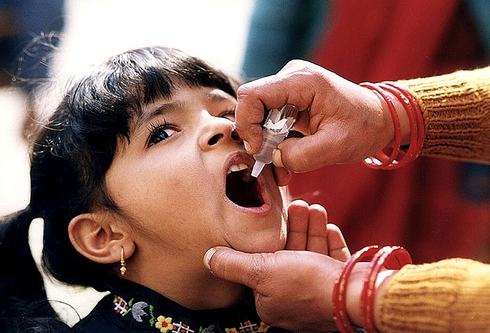
For decades, ensuring the safety and consistency of polio vaccines has relied on established biological testing methods. While these approaches have played a critical role in ensuring vaccine quality, evolving scientific and regulatory needs—along with increasing expectations around efficiency, scalability, and ethical considerations—are driving interest in more advanced, molecular-based tools.
How next-generation sequencing is transforming polio vaccine quality control
Next-generation sequencing (NGS)/high-throughput sequencing (HTS) enables scientists to analyze the full genetic composition of poliovirus vaccine strains with a level of detail not previously possible. By detecting even small genetic changes, NGS can (when appropriately validated) provide a highly sensitive and reproducible way to assess if vaccine strains remain stable and appropriately attenuated (or weakened).
Historically, these assessments have relied on biological testing models to confirm safety, particularly for live attenuated vaccines such as oral polio vaccines (OPVs) where genetic mutations can occur during manufacturing and replication that may increase virulence if not carefully controlled. While effective, such approaches can be resource-intensive, require specialized containment conditions, and have ethical considerations.
Advances in non-animal-based molecular methods—particularly NGS—have opened new possibilities for assessing vaccine genetic stability with greater precision, efficiency, and sustainability.
Through a global collaborative study led by the UK’s Medicines and Healthcare products Regulatory Agency (MHRA) from 2024 to 2026, multiple polio vaccine manufacturers and regulatory collaborators along with PATH as a technical assistance partner demonstrated that NGS could reliably measure genetic changes in poliovirus vaccines and provide results that are consistent across laboratories. These studies also contributed to the development of reference standards and data packages submitted to the WHO Expert Committee on Biological Standardization (ECBS), helping to build confidence in NGS as a fit-for-purpose method for vaccine lot testing.
In April 2026, WHO ECBS endorsed NGS/HTS as fit-for-purpose approaches under defined validation and implementation criteria for polio vaccine quality control. The endorsement marks a major milestone toward reducing reliance on traditional testing for neurovirulence (the ability of a vaccine virus to harm the nervous system). It also marks a significant step toward modernizing vaccine quality control, enabling a transition to more rapid, reliable, and non-animal-based testing methods.
“With WHO endorsing NGS to replace traditional neurovirulence testing, this is the right time to support implementation—so that training directly translates into practice.”— Dr. Kutub Mahmood, Scientific Director, PATH

Capacity strengthening is essential to bridge the gap between policy and practice
Building on the momentum from a polio NGS workshop held in Bangkok, Thailand, in 2025, PATH organized a hands-on training on NGS for polio vaccine quality control at the Institute of Medical Biology, Chinese Academy of Medical Sciences (IMBCAMS) in Kunming, China from May 18 to 22, 2026, with support from MHRA and IMBCAMS. The training brought together around 30 participants from Chinese vaccine manufacturers, national control laboratories, and provincial institutions of the Center for Disease Control and Prevention and Medical Products Administration.
Participants explored key steps in the process, including sample preparation, library generation, sequencing, and data analysis. They also gained exposure to how whole genome sequences and SNP profiles (maps of small genetic differences that help scientists track its consistency and safety) can be generated and interpreted for vaccine quality assessment.

Attendees of a PATH-organized polio NGS training at IMBCAMS from May 18-22, 2026. Photo: Jing Li.
By bringing together participants from vaccine manufacturers and regulatory laboratories, the program created a valuable platform for shared learning across institutions that played complementary roles in ensuring a smooth transition to NGS.
The transition to new technologies such as NGS requires more than technical instruction—it depends on building confidence, aligning understanding across stakeholders, and creating a foundation for consistent implementation.
Building on a long-standing partnership to advance vaccine quality innovation in China
PATH has a long history of working with Chinese partners to strengthen polio vaccine development and quality systems. PATH’s engagement dates back to early collaborations supporting the WHO prequalification of Beijing Institute of Biological Products Co., Ltd.'s (BIBP)’s OPV, including supporting BIBP to generate clinical data and strengthen regulatory pathways. Over time, this partnership has expanded to include technical assistance across multiple manufacturers and institutions, including IMBCAMS and other research institutes and vaccine manufacturers. The technical assistance supports activities such as seed characterization, vaccine lot release, and quality control system development. Sustained collaboration between Chinese manufacturers and PATH has built technical capacity and global alignment, enabling more active contributions from China to the global polio vaccine supply and advancing the adoption of innovative approaches such as NGS.
Looking ahead, important work is already underway in China to translate this momentum into national implementation. The National Institutes for Food and Drug Control, the China Pharmacopoeia Committee, and IMBCAMS are launching a collaborative study to establish standardized NGS-based assays for polio vaccine lot release and reduce reliance on traditional neurovirulence testing. This effort represents a significant step toward aligning regulatory science with emerging global practices and building a unified, validated approach that can be adopted across both manufacturers and regulatory laboratories.
As countries and regulators move toward implementation, the experience gained through collaborations like this will help ensure that the transition to NGS is not only technically sound but globally aligned—supporting the final steps toward a polio-free world.