Respiratory syncytial virus (RSV) is a major and underrecognized public health problem, causing more severe respiratory infections and hospitalizations in infants and young children than any other pathogen. A maternal vaccine and two long-acting monoclonal antibodies (mAbs) are licensed and globally recommended by the World Health Organization (WHO) to protect young infants from RSV. The maternal vaccine is WHO-prequalified, including in a multi-dose vial presentation well suited for use in many low- and middle-income countries (LMICs).
Countries must consider many factors when planning to introduce a vaccine, including the potential cost of rolling out a new intervention. PATH’s new RSV intervention cost calculator is designed to simplify the equation.
We spoke with Ranju Baral, Senior Health Economist at PATH, about how the cost calculator can help policymakers estimate RSV intervention program costs and even compare different RSV prevention products.
Q: Why is this an important moment for countries to start thinking about RSV prevention?
Ranju Baral: Nearly all children are infected with RSV by the age of 2, but the burden is not shared equally—more than 98 percent of pediatric RSV deaths occur in LMICs, where access to care is often limited.
Now that the multi-dose vial of the maternal RSV vaccine is WHO-prequalified, it offers a more affordable option with relatively easier logistical management, requiring less cold chain storage space. Combined with Gavi, the Vaccine Alliance’s commitment to support maternal RSV immunization programs, this progress means that many countries now have a clearer pathway toward introducing the vaccine. (Monoclonal antibodies, although available in the global market and recommended by WHO SAGE, may not yet be accessible to LMICs due to price constraints.)
Q: What does the RSV intervention cost calculator do, and how can it help country decision-makers?
Ranju: Between the maternal RSV vaccine and long-acting mAbs, countries now have multiple prevention options for protecting infants from RSV disease. And each product has different characteristics, delivery strategies, and cost implications.
The calculator provides a structured way to estimate the costs of introducing different RSV interventions. Rather than starting from scratch, policymakers can use the tool to quickly assess potential program costs—such as vaccine procurement, program delivery costs, and cold chain requirements—and compare available products.

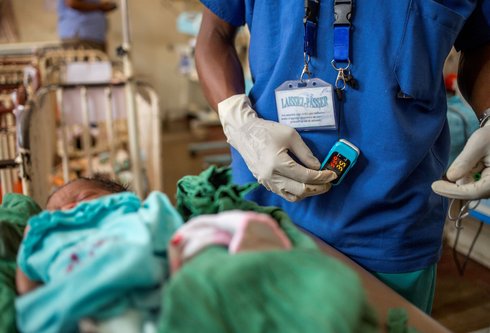
Nurses care for infants at the Sendwe Hospital NICU in Lubumbashi, Democratic Republic of the Congo. Photo: PATH/Georgina Goodwin.
Q: How does the calculator work?
Ranju: The cost calculator is a simple, Excel-based tool that estimates annual and five-year costs associated with RSV prevention programs. It includes products currently available on the global market and allows users to modify input data as relevant in a given setting to then project the cost of maternal vaccines, mAbs, or both intervention programs together.
The tool is available in English, French, and Spanish and adds to PATH's portfolio of vaccine cost calculators that cover many different antigens.
Users can estimate costs from two perspectives: the country perspective, and the combined country plus donor or Gavi perspective. The calculator also estimates cold chain volume requirements, which can help countries understand the storage and logistical implications of different products.
Q: The cost calculator is designed to work for any country, regardless of Gavi funding eligibility. What should users keep in mind when applying the results to their own context?
Ranju: Cost is only one piece of the puzzle when countries consider introducing a new vaccine. This tool is not intended to replace detailed budgeting exercises, and users should treat the results as a starting point that can support early planning discussions and further analysis.
Q: What do you hope this tool accomplishes?
Ranju: Maternal vaccines have exciting potential to protect infants who are most at risk of severe RSV disease. Further, our analyses on cost of illness and cost effectiveness indicate that maternal RSV vaccines could be a smart investment in many Gavi-eligible countries.
It’s my hope that tools such as the RSV cost calculator can help jumpstart evidence-based decision-making on maternal RSV vaccines. By taking steps to prepare now, countries will be well positioned to introduce RSV prevention products in the near future.