Nigeria
Strengthening health systems to deliver better care
PATH has been active in Nigeria for over a decade, strengthening health care services, advancing digital health systems, and promoting data-driven decision-making. PATH collaborates closely with Nigeria’s Federal Ministry of Health, the National Malaria Elimination Program, and National Primary Health Care Development Agency (NPHCDA). Together, we are expanding access to quality health care in communities across Nigeria.
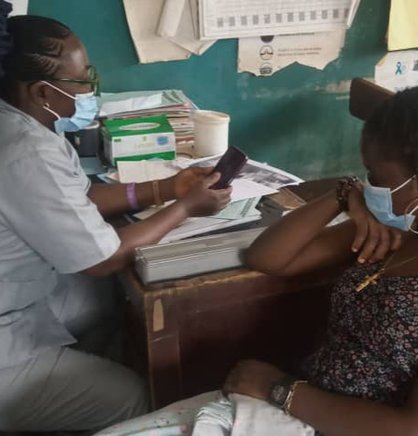
The Rotary Healthy Communities Challenge (RHCC), implemented by PATH in Nigeria, aims to reduce child mortality from malaria, diarrhea, and pneumonia. In collaboration with local health authorities, RHCC is increasing access to community-level health care, developing and strengthening digital reporting platforms, and engaging communities to prevent childhood illness. So far, PATH has trained 2,750 community health workers (CHWs) in Kebbi and Akwa Ibom states to deliver integrated community case management (iCCM). iCCM enables CHWs to treat two or more childhood illnesses (pneumonia, diarrhea, and malaria) in their communities, instead of traditional health facilities. Through iCCM, RHCC is expanding access to lifesaving care for children under 5.
Nigeria has a high malaria burden and a large population. PATH is a trusted partner in Nigeria’s malaria response, strengthening governance, improving data quality, and expanding access to effective diagnosis and treatment, while fostering local ownership and long-term sustainability through the Malaria Control and Elimination Partnership in Africa (MACEPA) and the Reaching Every At-Risk Community and Household with Malaria Services (US PMI REACH) projects.
Through initiatives like Digital Square and the CDC-led Technical Assistance Platform (TAP), PATH supports the development and optimization of Health Information Systems (HIS). These efforts include enhancing electronic medical records, integrating service delivery data, and improving data governance. PATH’s work in this area has led to the establishment of national HIS governance structures and the development of tools like the Patient Identity Management System, which are critical for achieving Universal Health Coverage and epidemic control.
PATH partners with Nigeria’s National Primary Health Care Development Agency and the National Malaria Elimination Program to provide strategic technical assistance in introducing and scaling critical vaccines, including malaria, Hepatitis B birth dose, and HPV. Through the Malaria Vaccine Technical Assistance project, PATH supports phased introduction and scale-up of the malaria vaccine in Bayelsa and Kebbi states. PATH is supporting the scale-up of the Hepatitis B birth dose vaccine and addressing barriers to timely delivery. Additionally, PATH is working to address gender and social barriers to accessing the HPV vaccine.
Partner with us
Strategic partnerships are at the core of what we do in Nigeria. Email us to collaborate, invest, or partner today.
- Country Representative and MACEPA Team Lead: Ayebatari Lawson tlawson@path.org
- Business Development Officer: Lucy Mwaitete, proposals@path.org
Our office is located in Abuja
As of 2024, the Organization for Innovation in Public Health (OIPH) was established as a local affiliate of PATH and trades as PATH in Nigeria.
40 Mike Akhigbe Way Jabi, Abuja Nigeria
40 Mike Akhigbe Way, Jabi, Jabi District, Abuja, Municipal Area Council, Federal Capital Territory, Nigeria
Meet our team
-
![]()
Ayebatari Lawson
Nigeria Country Representative and MACEPA Team Lead
-
![]()
Chinedu Egwuonwu
Community Case Management-Team Lead, RHCC Nigeria
-
![]()
Uchenna Nwokenna
REACH Chief of Party
-
![]()
Hadiza Hussayn Jibril
Senior Program Project Manager II