In the vast expanse of Turkana, where long distances and harsh terrain often stand between families and the care they need, Alice Ekal begins her work before most of us get out of bed.
As the subcounty Expanded Programme on Immunization Coordinator in Lokichar, she carries a responsibility that is both technical and deeply human: ensuring that every child in her subcounty receives lifesaving vaccines—and with them, a fair chance at a healthy future.
That responsibility is anything but simple.
Communities are spread across long distances, health facilities are few, and roads in many areas remain challenging. During the dry season, mothers often walk for hours in high temperatures to reach outreach posts. When the rains come, seasonal rivers swell and make travel difficult—sometimes doubling the time and terrain a family must navigate.
For many women, seeking essential services—from routine care to lifesaving interventions—means carrying a child on their back, taking another by the hand, and holding hope in their hearts.
Yet women like Alice never waver.
Behind Kenya’s broader health system goals—from primary care to maternal, newborn, and child health—is the steady persistence of women like her: coordinating outreach schedules, safeguarding essential commodities, supporting community health promoters, and making sure vital services reach even the most remote settlements. Their mission is clear: No one should be left behind because of geography, poverty, or circumstance.
For many women, seeking essential services—from routine care to lifesaving interventions—means carrying a child on their back, taking another by the hand, and holding hope in their hearts.

Give to Gain
This year’s International Women’s Day theme, Give to Gain, challenges us to rethink how we view investment in women.
Too often, empowerment is framed as symbolism. In health systems, giving is neither sentimental nor optional—it is structural. It means equipping frontline workers with reliable tools, strengthening data use so services reach those who need them most, and ensuring facilities can deliver timely, quality care. When we invest in women’s health and the systems that serve them, the gains are measurable.
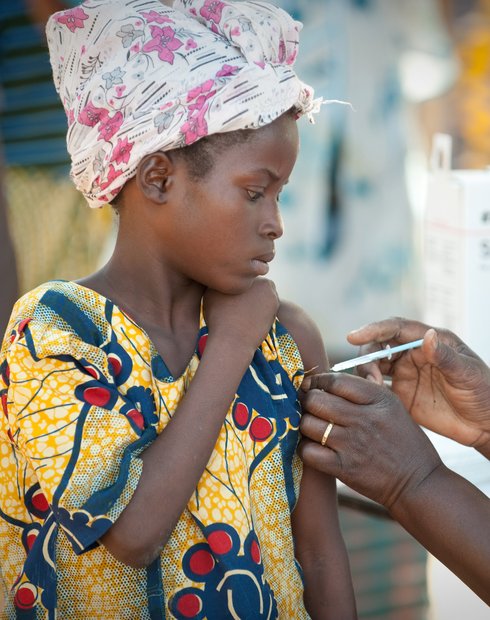
PATH Kenya has supported immunization systems strengthening across all 47 counties in Kenya, helping them improve cold chain reliability, data use, and service delivery so more children are reached—especially in hard‑to‑access geographies.
In maternal health, Kenya’s expansion of heat‑stable carbetocin is improving the safety of childbirth by making a key medicine to prevent postpartum hemorrhage more accessible in low‑resource settings. And by digitizing more than 4,300 medical devices, facilities have better visibility into equipment status and maintenance—reducing downtime that can compromise care for women and newborns.
These are practical, systems‑level gains that women feel at the clinic door, in the maternity ward, and in their households. Women are central to universal health coverage in three ways:
- They are primary users of essential health services—especially maternal, newborn, child, and preventive care.
- They are key household decision‑makers whose access to timely information, transport, and quality care often determines whether a child is vaccinated or treated.
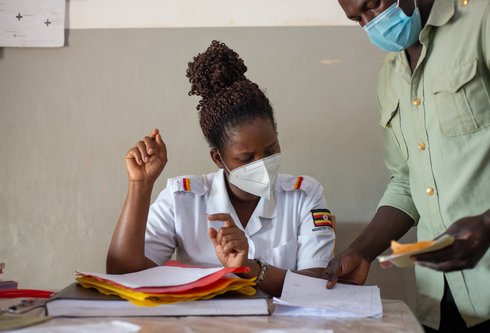
- They form a large share of our health workforce—from community health promoters to nurses, laboratory specialists, program managers, and policy leaders.
When frontline workers are equipped and included in planning, system performance improves; when resources are constrained, equity suffers.
When frontline workers are equipped and included in planning, system performance improves; when resources are constrained, equity suffers.

Leadership does not happen in isolation
Women in health systems navigate barriers that are personal—but also structurally shaped by institutional culture, societal norms, and policy frameworks. The most durable progress comes from health system solutions: clear pathways for professional growth, access to high‑quality training and mentorship, safe and supportive workplaces, and reliable tools and data that enable every provider to perform at their best. Investing in these conditions strengthens services for everyone.
The Kenya story mirrors global patterns. Around the world, women contribute substantially to the health workforce, yet there remains room to better recognize and use their expertise within health systems. Closing that gap is not a matter of optics; it is about performance—stronger problem‑solving, improved trust, and faster uptake of solutions that reflect the realities families face.
Give to Gain is, at its core, a blueprint for building resilient health systems. When institutions collaborate, when resources are shared strategically, and when providers—across all cadres—are supported to deliver, the gains multiply: health outcomes improve, maternal and newborn deaths decline, outbreaks are detected earlier, adolescents access accurate health information, and communities deepen trust in public services. The return on investment is unmistakable—healthier children, safer deliveries, informed families, and a supported frontline.
Leadership does not happen in isolation. Women in health systems navigate barriers that are personal—but also structurally shaped by institutional culture, societal norms, and policy frameworks.

Health equity in action
And so we return to Alice.
Her work in Lokichar is not simply about vaccines—it is equity in action: ensuring that a child born in a remote village has the same chance at survival and health as one born in an urban center. It is about translating policy commitments into lived reality.
Alice represents thousands of women across Kenya who rise each day to sustain our health system—often in conditions that demand extraordinary resilience. When we invest in what enables their success—reliable supplies, timely data, safe workplaces, effective training, and functioning systems—we strengthen Kenya itself.
Investing in women’s health is not a cost to absorb; it is a catalyst for national progress. This International Women’s Day, let us move beyond celebration toward commitment—to the practical investments that help the health system work for everyone. When women can access quality care and health workers are equipped to provide it, we all gain.