In a conference room in London in late October, fifteen technical experts were charged with rapidly collecting biological samples for several disease outbreaks happening around the globe. Many decisions needed to be made quickly, and details were sparse.
As intense as this may sound, thankfully, these outbreaks weren’t real. This was part of a simulation exercise organized by PATH and the Coalition for Epidemic Preparedness Innovations (CEPI) to test the design and development of the Biospecimen Sourcing Initiative (BSI).
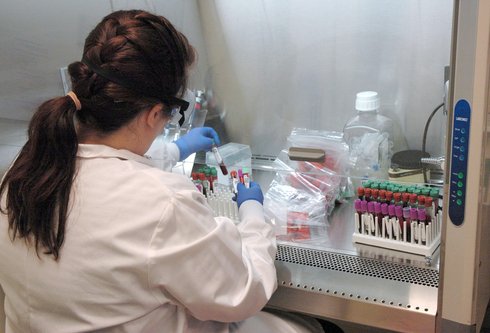
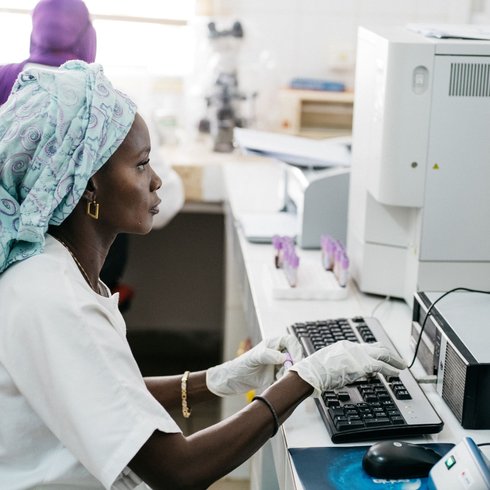
The BSI is a new global resource that aims to facilitate the timely, coordinated, and ethical sourcing of biospecimens—such as blood—in an infectious disease outbreak.
Such specimens need to be rapidly, safely, and ethically gathered from individuals who have recovered from the disease for scientists to gain invaluable insights into the circulating virus and how the body builds its immune response to fend off an infection. This helps support the rapid development of new vaccines, diagnostics, and treatments to protect other people against the emerging virus.
CEPI aims to achieve this in as little as 100 days. However, the incredible amount of work required to build new biospecimen collection processes each time they are needed slows down progress and response speed. To address this, PATH is supporting the establishment of this global biospecimen repository network that will ultimately sit under the guidance of CEPI, offering a more efficient, consistent, and user-friendly approach.
What’s a “simulation exercise”?
This testing event was a first step in evaluating the BSI’s vision and planned structure. It also provided an opportunity to validate proposed BSI processes—such as determining whether an outbreak necessitates a sample collection activity or defining a rapid, feasible decision-making structure to collect samples—and identify areas for improvement.
Helen Storey, public health scientist and BSI technical lead at PATH, designed the event as a tabletop exercise based on the World Health Organization’s Framework for Simulation Exercises to practice specific aspects of rapidly deploying sample collection activities in the context of emerging public health threats in distinct geographic settings. Through guided scenarios and group discussions facilitated by PATH, the participants (all of whom were CEPI staff members who could be involved in helping respond to a real outbreak) were challenged with four types of scenarios.
“We presented the participants with realistic scenarios derived from previous experiences or actual events, and then tasked them with reviewing and discussing essential processes for responding to a series of scenario-based prompts,” explained Roger Peck, Associate Director of Diagnostics and BSI Project Lead at PATH. “They had to assume their own roles and propose solutions that would align with BSI resources and established CEPI plans, policies, systems, and procedures.”
For instance, one scenario involved an outbreak of Machupo virus and examined how BSI’s governance plan could guide partnership formation, sample collection, and collaboration in a country with no prior CEPI engagement. Another scenario focused on an outbreak of a type of Ebola virus and assessed how the BSI would rapidly make the decision to deploy biospecimen collection in a consistent and transparent manner.
Collaboration leads to speed
In an emerging disease outbreak, the speed of the public health response is absolutely critical to saving lives. During the COVID-19 pandemic, the first safe and effective vaccines were rolled out within just 326 days, reducing severe disease and deaths.
While this was an unprecedented accomplishment and saved countless lives and livelihoods, the world needs to increase the pace of response to future outbreaks to keep them from realizing their pandemic potential. This is where the 100 Days Mission comes in. Spearheaded by CEPI and supported by leaders of the G7 and G20, the ambitious goal acts as a driving force to prepare for the next Disease X. Although this is only around one-third of the time it took to develop the first COVID-19 vaccines, analyses have suggested that, with innovation and extensive collaboration, this goal is well within reach.
Biological samples from people who survive an infection are vital for creating new vaccines against Disease X because they help to reveal how much immunity a candidate vaccine can deliver. The BSI aims to reduce the time needed to prepare these samples—from six months or more to just a few weeks—so immune-assessment tools are ready when a future outbreak hits.
“Once operationalized, the BSI will provide important tools to enable swift and harmonized biospecimen collection in an outbreak,” said Selorm Avumegah, BSI Project Lead at CEPI. “Through our ongoing work on the Centralized Laboratory Network, we’ve learned that collaboration is critical to speed, and it’s clear from this testing exercise that the BSI will only achieve rapid response through effective collaboration.”
“Once operationalized, the BSI will provide important tools to enable swift and harmonized biospecimen collection in an outbreak.”— Selorm Avumegah, BSI Project Lead at CEPI

CEPI established the Centralized Laboratory Network in March 2020 in response to the COVID-19 pandemic. It played a vital role by offering free testing of all preclinical and early clinical trial samples for any COVID-19 vaccine developer. Since then, the network has significantly expanded, with 20 facilities using shared methods and techniques to facilitate consistency and harmonization of results. CEPI’s learnings to date indicate that this global alignment and collaboration with a wide range of partners is the key to facilitating a faster response.
The testing event confirmed that, similarly, the BSI’s success will require continued, voluntary collaboration, which builds trust and transparency and facilitates equitable access. The participants also agreed on the importance of supporting regional preparedness through strengthened local and regional capacity of partners, as well as engaging communities to be responsive to local priorities and needs.
Launching the BSI
Now that the first testing event is complete, PATH is refining the BSI’s governance structure and processes, such as determining whether sample collection is required or not in an outbreak, to be adaptable and fit for purpose. PATH experts are also creating a documents library to establish procedures and templates that ensure the highest ethics, safety, and logistics standards are met to provide consistent and rapid acquisition, storage, and sharing of samples. More testing events are planned for the first half of 2026 with a broader set of partners before the BSI becomes fully operational and ready to initiate sample collection and collaboration in an outbreak.
The BSI will also align with best practices set by World Health Organization initiatives, as well as ongoing work by the Africa Centres for Disease Control and Prevention and critical conversations happening as part of the Pandemic Agreement discussions to support rapid access to and sharing of biological samples.
“CEPI’s goal of establishing an active network of global biobanks and biorepositories to advance scientific readiness for outbreak response will be essential to ensuring the consistent and rapid acquisition, storage, and sharing of samples from people who have survived outbreaks,” said Roger.
“PATH is honored to be playing a role in shaping this initiative, which is sure to improve global collaboration and facilitate faster specimen gathering to speed vaccine development in future disease outbreaks.”