In Indonesia, a country of roughly 285 million people, the Ministry of Health (MOH) has launched a major reform effort to transform how primary health care (PHC) is delivered across the country.
This reform, known as Integrated Primary Health Care or Integrasi Layanan Primer (ILP), involves restructuring the health system to prioritize health promotion, prevention, and accessibility through closer-to-community care, as well as standardizing PHC capabilities and services provided at facilities, laboratories, integrated health posts, and through home visits.
The ILP reform is further enabled by digital integration under broader national health transformation initiatives. A major focus is on shifting from fragmented services and roles to an integrated life-course approach through trained community health workers, known locally as kaders.
Starting in early 2023, PATH, with support from the Gates Foundation, partnered with the MOH to design a set of quality-improvement adjustments to ILP that addressed gaps in kader capacities, referral and continuum of care processes, and decision-support systems. This initiative, known as “ILP+,” grew from an intentional, iterative co-design process involving the MOH, Provincial Health Office (PHO), District Health Offices (DHOs), puskesmas, village leaders, and local kaders.
Together, PATH and partners pinpointed challenges in ILP deployment and identified priority interventions that would support community health care workers to deliver high-quality, integrated life-course care. This included building kader capacities and skills, strengthening community accountability of health care access and outcomes, and improving coordination and linkages between home, community, and facility care networks, supported by a digital decision-support tool.
Empowering kaders through practical, case-based learning
In response to a clear need for training better tailored to kader needs across 25 competency areas, PATH worked with the MOH, PHO, DHOs, puskesmas, and kaders to incorporate hands-on, interactive learning and adult-learning principles into the country’s existing training curriculum.
To date, nearly 2,300 kaders in two priority districts—Surabaya (East Java Province), a hyper-urban area with high population density and advanced PHC networks, and Keerom (Papua Province), a remote border district with limited access to health services—have taken part in this enhanced training.
Early results show marked improvements in kader skills and readiness to deliver community-based health education and promotion. Crucially, kaders are now able to detect early warning signs, identify missed services, address non-adherence, and deliver screening and services directly to people’s homes or communities. This reduces both the need and frequency of clients traveling between facilities for prevention services, thereby lowering barriers and costs while strengthening prevention efforts.

A community health worker participates in an ILP competency check in Keerom. Photo: PATH.
Alongside the enhanced competency training, staff at public-sector PHC centers (puskesmas) were trained to supervise kaders and engage them in routine pause-and-reflect sessions, mini skills strengthening, and other activities aimed at improving service quality and strengthening community-to-facility linkages.
“In the past, I felt like [health workers and kaders] were working separately. But now, they always report to us. This has made our work much easier.”— Supervisor, Keerom

Service delivery grounded in digital innovation
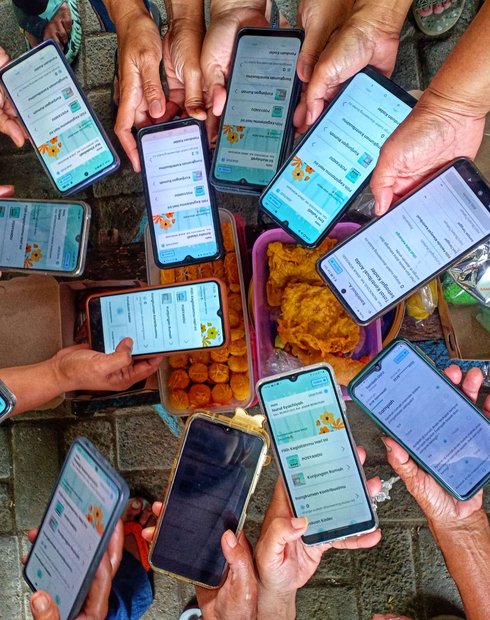
PATH further worked to optimize the continuum of care between community and facility entry points through the development of Kader Kita, a digital decision-support tool. Co-created in close consultation with kaders and local stakeholders, Kader Kita equips kaders with a mobile application to screen, record, and follow up on health risks during home visits and at integrated health service posts (posyandu).
Alongside this, a web-based dashboard empowers local health leaders to identify risk trends, track kader performance, and make data-informed decisions.
This integrated system—adopted and used regularly by more than 80% of kaders in Surabaya and Keerom—has already made a real impact on the quality of services, offering faster follow-up and continuity of care for communities while reducing the burden on health workers and local health officials.
Since its launch, the Kader Kita app has been used to screen more than 24,000 people, including nearly one in two people (44%) reached via home visits only—individuals who may otherwise have been missed.
“I went to the OB-GYN for a consultation, and on the same day, I received a message on WhatsApp from a kader asking about my pregnancy and scheduling a follow-up home visit.”— Client in Jemursari, Surabaya

Early results indicate improvements in antenatal care visits in Keerom and noncommunicable disease control in Surabaya. There are also indications of improved reach among school-age children, adolescents, and elderly people through household visits by kaders—age groups less likely to be reached at health centers.
Importantly, enhanced data visibility through Kader Kita has enabled more targeted, cost-effective resource allocation.
To further support ILP scale-up, PATH deployed geospatial tools to assess community health worker needs in the project geographies, considering factors such as population density, existing kaders and health facility locations, and local disease burden.
A decision-support dashboard is underway to help decision-makers plan kader allocation in line with population health needs.
“Kader Kita has made our work much easier because we know what kader are doing and understand the current health conditions of the community much better as a result.”— Village leader, Keerom

Looking ahead
PATH is committed to partnering with the Indonesia MOH to translate ILP+ for national adoption through optimized resourcing to deliver affordable, high-quality care where it matters most.
Moving forward, PATH and MOH partners will integrate new screening capacities into kader roles, further tailor competency-building efforts, and enhance quality improvement processes to grow Indonesia’s digitally enabled community health workforce.